Choosing the best Custom Gear Motor supplier in 2026 requires more than comparing prices. Global buyers need dependable engineering, consistent production, and responsive support after delivery. A motor may look excellent in a catalog, yet fail when heat, vibration, or continuous loading increases. Real performance matters.
This guide examines suppliers through practical buying criteria. These include torque accuracy, gear ratios, motor efficiency, noise control, housing materials, sealing levels, and expected service life. It also considers prototype support, drawing review, sample testing, production capacity, and quality inspection. A supplier’s ability to adapt shaft dimensions, mounting holes, connectors, and control requirements can reduce costly redesigns.
Certification claims deserve careful review. Buyers should request test records, traceable specifications, and clear warranty terms. Delivery times should be confirmed in writing, especially for customized batches. Communication matters too. A technically strong factory can still create delays if engineering changes are poorly documented.
No supplier is perfect. Some companies offer impressive customization but limited after-sales support. Others provide fast delivery but fewer testing options. These trade-offs are easy to overlook. This overview therefore avoids treating one feature as decisive. It compares practical strengths, weaknesses, and suitable applications for different global buyers.
From compact medical equipment to automated conveyors and smart access systems, each application creates different demands. A quiet planetary gearbox may suit precision equipment, while a robust helical design may better handle industrial loads. The recommendations ahead are designed to support informed supplier screening, not replace technical validation. Request samples. Test real conditions. Then decide.
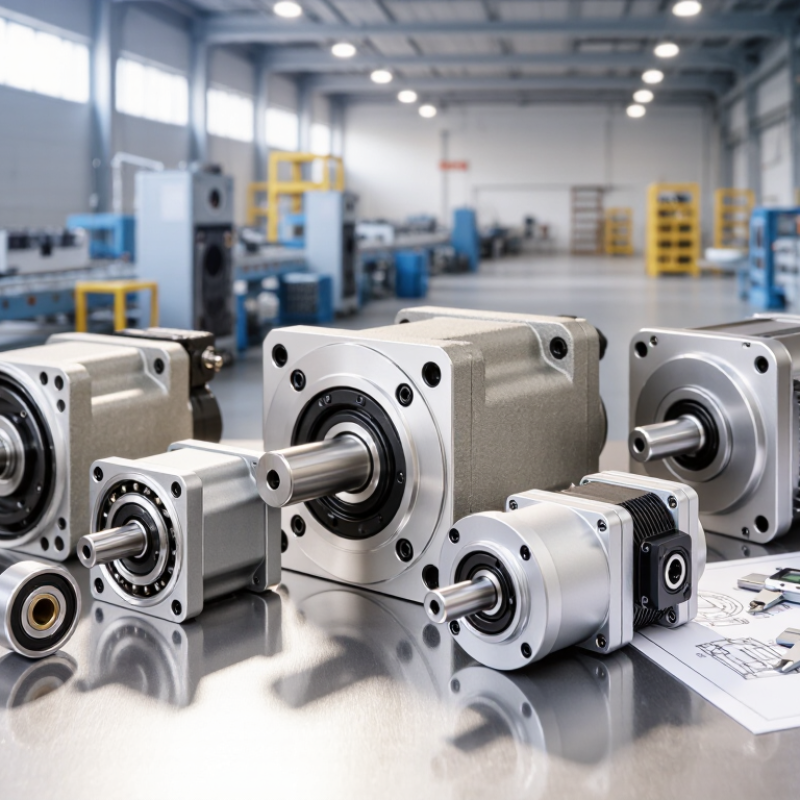
A custom gear motor combines an electric motor with a gearbox designed for a specific machine. It delivers controlled speed, torque, and motion in a compact assembly. Unlike an off-the-shelf unit, its shaft, mounting holes, gear ratio, voltage, and connector can match the equipment. This matters when a standard motor leaves wasted space or creates unstable movement. In practical testing, engineers often check load cycles, noise, heat, and startup performance before approving a design. Small details matter.
Global buyers need these motors because machines operate under different power standards, climates, and production demands. A food-processing line may require sealed housing and easy cleaning. A warehouse conveyor may need high starting torque and continuous duty. Outdoor equipment can face dust, humidity, and sudden temperature changes. Customization helps buyers balance performance, energy use, service life, and installation space. It can also reduce field modifications, shipping delays, and maintenance problems when specifications are confirmed early.
Reliable sourcing requires more than a low quotation. Ask for drawings, material details, test records, tolerance data, and sample approval procedures. Experienced suppliers should explain gear wear, lubrication, thermal limits, and protection ratings clearly. They should also support pilot production and traceable quality checks. Still, no design is perfect on paper. A motor may pass bench tests yet behave differently after months of vibration. Buyers should review real operating data, allow corrective changes, and avoid trusting unverified claims.
2026 Best Custom Gear Motor Suppliers for Global Buyers
How to Define Gear Motor Requirements Before Choosing a Supplier
A reliable gear motor project starts with measurable operating conditions, not a supplier catalog. Record the required output torque, speed range, duty cycle, voltage, and direction of rotation. Include starting torque. It is often higher than running torque. Define the load profile in real terms, such as lifting 40 kilograms for ten seconds every minute. This detail helps engineers select suitable gears, bearings, and motor margins.
Check the installation environment before requesting quotations. Measure available space and specify shaft diameter, mounting holes, cable position, and allowable weight. State ambient temperature, humidity, dust exposure, and cleaning methods. An IP rating may matter in a washdown area. So does insulation class. Consider backlash, noise, vibration, radial loads, and expected service hours. A quiet prototype can become surprisingly loud after continuous operation.
Ask potential suppliers for performance curves, dimensional drawings, material details, test procedures, and sample data. Request evidence of torque consistency across production batches. Traceability is useful when a replacement is needed years later. A custom sample should run under your actual load, not only unloaded on a workbench. One overlooked issue is thermal behavior inside a tight enclosure. I have seen acceptable calculations fail there. Leave room for testing, because the first specification is rarely perfect. Share unacceptable conditions clearly, including stall time and emergency stopping frequency. This gives the supplier a practical basis for engineering, quotation, and quality control.
2026 Best Custom Gear Motor Suppliers for Global Buyers
Key Criteria for Comparing Custom Gear Motor Suppliers in 2026
A capable supplier should understand your complete motion profile, not only the requested motor power. Share load, speed, duty cycle, noise limits, ambient temperature, and mounting space. The supplier should translate these details into torque calculations, gear ratios, thermal checks, and a documented design proposal. Ask for drawings, tolerance tables, material specifications, and prototype test results. Clear engineering evidence matters more than attractive product photographs.
Look for manufacturing experience with small batches and repeat production. A reliable supplier can explain machining controls, winding inspection, gear backlash, lubrication, and end-of-line testing. Request sample data, such as operating temperature after continuous running or measured output torque at several speeds. Short answers are warning signs. So are unexplained changes.
Quality systems need practical proof. Check traceability from raw materials to final inspection, calibration records, and procedures for handling nonconforming parts. Certifications can support trust, but certificates alone do not guarantee stable performance. A factory visit or live video audit may reveal storage conditions, test equipment, and actual assembly practices.
Global purchasing also depends on communication and risk control. Compare response times, engineering change procedures, packaging protection, lead-time accuracy, and spare-part support. Confirm export documents and destination-market requirements before placing an order. A polished website proves little. Even experienced buyers can overvalue low pricing and underestimate redesign costs. A balanced supplier scorecard should include technical fit, production capacity, service reliability, and evidence from real samples.
Leading custom gear motor suppliers serve very different application demands. A compact motor may drive a medical pump, while a high-torque unit moves a warehouse conveyor. Experienced suppliers begin with load, speed, duty cycle, noise limits, and installation space. They should ask about real operating conditions, not only the drawings.
A reliable supplier can recommend gear ratios, motor materials, sealing methods, and control options. For outdoor equipment, moisture protection and temperature range need careful review. For food-processing machinery, cleanable surfaces and suitable lubricants matter. Suppliers with engineering teams often provide prototypes, torque testing, efficiency data, and dimensional reports. These records help buyers compare performance before approving larger production runs.
Customization still has limits. A supplier may accept a specification too quickly, then discover heat buildup during continuous operation. That is a warning sign. Request sample testing under realistic loads, including starts, stops, vibration, and extended running time. Ask how design changes are controlled and how replacement parts will remain available. Clear quality procedures, traceable materials, and responsive technical support strengthen long-term purchasing decisions. Some low-cost proposals look attractive. They may hide expensive redesign work later.
Custom gear motor supplier comparison by application, technical requirements, customization scope, and international purchasing factors
| Application | Recommended Gear Motor Type | Typical Output Torque | Typical Output Speed | Common Power Range | Common Supply Voltage | Important Customization Requirements | Typical Protection / Duty | Global Buyer Evaluation Points |
|---|---|---|---|---|---|---|---|---|
| Conveyor Systems | Helical, parallel-shaft, or worm gear motor | 20–5,000 N·m | 5–300 rpm | 0.12–30 kW | 230/400 V AC, 50/60 Hz; 24/48 V DC options | Mounting position, hollow or solid shaft, brake, encoder, backstop, shaft coating | IP55–IP66; S1 continuous duty is common | Continuous-load testing, thermal performance, noise, spare parts, and documentation |
| Packaging Machinery | Planetary, helical, or precision inline gear motor | 2–1,000 N·m | 10–1,500 rpm | 0.09–15 kW | 24/48 V DC, 110/230 V AC, and 230/400 V AC | Low backlash, precise indexing, servo compatibility, compact housing, custom connectors | IP54–IP65; intermittent or S1 duty depending on machine cycle | Positioning accuracy, cycle life, response time, food-contact material requirements, and validation samples |
| AGV and AMR Platforms | Low-voltage planetary or spur gear motor | 5–500 N·m per drive wheel | 30–800 rpm | 100 W–5 kW | 24, 36, 48, or 72 V DC | Encoder, electromagnetic brake, wheel hub, CAN communication, thermal sensor, custom cable | IP54–IP67; frequent acceleration and regenerative braking | Battery compatibility, peak torque, braking safety, wheel alignment, vibration resistance, and EMC testing |
| Medical and Laboratory Equipment | Precision planetary, worm, or compact DC gear motor | 0.05–100 N·m | 1–500 rpm | 5 W–1.5 kW | 12/24 V DC; 100–240 V AC through approved drives | Low noise, low vibration, sterilization-compatible materials, encoder, clean-room options | IP40–IP65; intermittent or controlled continuous duty | Traceability, risk-management support, acoustic data, repeatability, and application-specific compliance |
| Industrial Robotics | Harmonic-drive, cycloidal, or precision planetary gear motor | 10–3,000 N·m | 5–500 rpm | 100 W–20 kW | 24/48 V DC or 230/400 V AC | Very low backlash, high torsional stiffness, absolute encoder, brake, flange geometry | IP54–IP65; cyclic duty with frequent reversals | Backlash, repeatability, service life, torsional stiffness, thermal capacity, and complete test reports |
| Solar Tracking Systems | Worm, slew-drive, or self-locking geared motor | 100–20,000 N·m | 0.05–20 rpm | 90 W–5 kW | 12/24/48 V DC or 230 V AC | Self-locking ratio, corrosion-resistant finish, limit switches, manual override, outdoor cables | IP65–IP68; outdoor intermittent duty | Wind-load rating, sealing, corrosion protection, operating temperature, and long-term field reliability |
| Food and Beverage Processing | Hygienic helical, bevel, or stainless-steel gear motor | 10–2,500 N·m | 5–500 rpm | 0.12–22 kW | 230/400 V AC, 50/60 Hz | Stainless housing, hygienic mounting, food-grade lubricant, washdown coating, drain design | IP66–IP69K; S1 continuous duty is common | Washdown resistance, hygienic design, lubricant documentation, corrosion testing, and sanitation compatibility |
| HVAC and Building Automation | Worm, spur, or compact brushless DC gear motor | 0.5–250 N·m | 1–200 rpm | 5 W–750 W | 12/24 V DC or 100–240 V AC | Quiet operation, spring-return actuator, limit switches, fail-safe brake, building-control interface | IP20–IP65; intermittent or modulating duty | Noise level, energy efficiency, fail-safe behavior, control compatibility, and field replacement availability |
Choosing a custom gear motor supplier requires more than comparing catalog prices. In supplier audits, I check machining marks, shaft play, grease leakage, and noise at the rated load. The International Energy Agency reports that motor-driven systems consume roughly half of global electricity. Efficiency is therefore a commercial issue, not only an engineering detail. Ask for torque-speed curves, thermal test results, insulation class, duty cycle, and measured efficiency. A sample should run continuously before approval.
Compliance needs documents that match the exact model. Request traceable material certificates, production inspection records, and test reports against IEC 60034 requirements. For restricted substances, verify current RoHS and REACH declarations, including component-level coverage. ISO 9001 certification supports process control, but it does not prove every motor is reliable. I would not trust a certificate alone. Factory video calls and random third-party inspections expose uncomfortable gaps.
Pricing should include tooling, prototypes, packaging, testing, freight terms, and warranty handling. The U.S. Department of Energy’s motor-system guidance emphasizes lifecycle efficiency, which can outweigh a lower purchase price. Compare energy use over the expected operating hours. Also define response times, replacement-part availability, failure analysis, and corrective-action reports. Ask for three references with similar torque and environmental demands. One weakness remains common: buyers often measure supplier promises, but not recovery speed after failure. That deserves a written service-level agreement.
How to Verify Quality, Compliance, Pricing, and After-Sales Support
This practical 100-point buyer scorecard prioritizes measurable evidence when evaluating custom gear motor suppliers. Quality and compliance receive the highest weighting because they directly affect reliability, safety, and international market access. Buyers should request test reports, drawings, certificates, quotations, warranty terms, and documented response procedures before placing an order.
Record output torque, speed range, duty cycle, voltage, rotation direction, and starting torque. A lifting example helps: 40 kilograms for ten seconds every minute. Real loads matter.
Starting torque can exceed running torque. Ignoring it may cause slow starts, overheating, or unexpected stalling. This detail is easy to miss.
Share shaft diameter, mounting-hole positions, cable location, available space, and maximum weight. Also describe temperature, humidity, dust, cleaning methods, and enclosure conditions.
Request performance curves, dimensional drawings, tolerance tables, materials, and prototype test results. Measured evidence is more useful than attractive photographs.
Test the motor under actual load, including starts, stops, vibration, and extended operation. An unloaded workbench test proves very little. Test it properly.
Measure operating temperature during continuous running inside the planned enclosure. A motor may pass calculations but overheat in a tight space. Leave testing room.
Ask for material traceability, calibration records, production-batch torque data, and final inspection procedures. Certificates help, but they cannot guarantee stable performance alone.
Review small-batch experience, repeat-production control, engineering communication, lead-time accuracy, packaging, and spare-part support. Confirm design-change procedures before ordering.
Outdoor equipment may need moisture protection and a wider temperature range. Food machinery may require cleanable surfaces and suitable lubricants. Application details change everything.
Do not choose only by low price or motor power. A cheap proposal may create redesign costs later. The original specification may be imperfect.
This guide explains what a Custom Gear Motor is and why global buyers rely on tailored drive solutions for equipment with specific speed, torque, load, space, and environmental requirements. It outlines how to define technical specifications before contacting suppliers, including power ratings, gear ratios, mounting methods, duty cycles, control needs, materials, and operating conditions. Clear requirements help buyers avoid unsuitable products, reduce redesign risks, and improve project efficiency.
The article also presents practical criteria for comparing Custom Gear Motor suppliers in 2026, such as engineering capability, manufacturing capacity, quality control, customization flexibility, certifications, communication, lead times, and total cost. It discusses how different suppliers may serve applications including automation, material handling, medical equipment, energy systems, and industrial machinery. Finally, buyers will learn how to verify product quality, regulatory compliance, pricing transparency, testing procedures, warranty terms, spare-parts availability, and after-sales support before making a reliable international purchasing decision.

DyneticPro Motor