7 Best Permanent Magnet Motors for Global Buyers

Time:2026-09-13 Author:Sophia
0%

Choosing the right Permanent Magnet Motor can shape a machine’s efficiency, noise level, and service life. For global buyers, the decision rarely depends on power rating alone. Voltage, torque, cooling method, speed range, and installation space can change the result significantly.

This guide examines seven leading motor types for industrial equipment, electric vehicles, pumps, conveyors, robotics, and renewable energy systems. Each selection considers operating performance, control compatibility, maintenance needs, and supplier transparency. Practical details matter, such as whether the motor starts smoothly under load or overheats inside a crowded cabinet. Small differences matter.

Some specifications look impressive but provide little value without test conditions. A high efficiency figure may depend on a narrow speed range, controlled temperature, or ideal loading. Buyers should request performance curves, insulation details, bearing information, and documented quality procedures. Independent testing can add confidence, especially when suppliers operate across different regions.

No single motor suits every market. A compact design may reduce installation costs but offer less thermal capacity. A powerful model may demand a larger inverter and stronger mechanical support. The comparison is useful, but not flawless; real performance depends on system design and operating habits. Careful questions remain essential. This overview aims to connect technical facts with purchasing experience, helping engineers and procurement teams compare options clearly, realistically, and with fewer costly surprises.
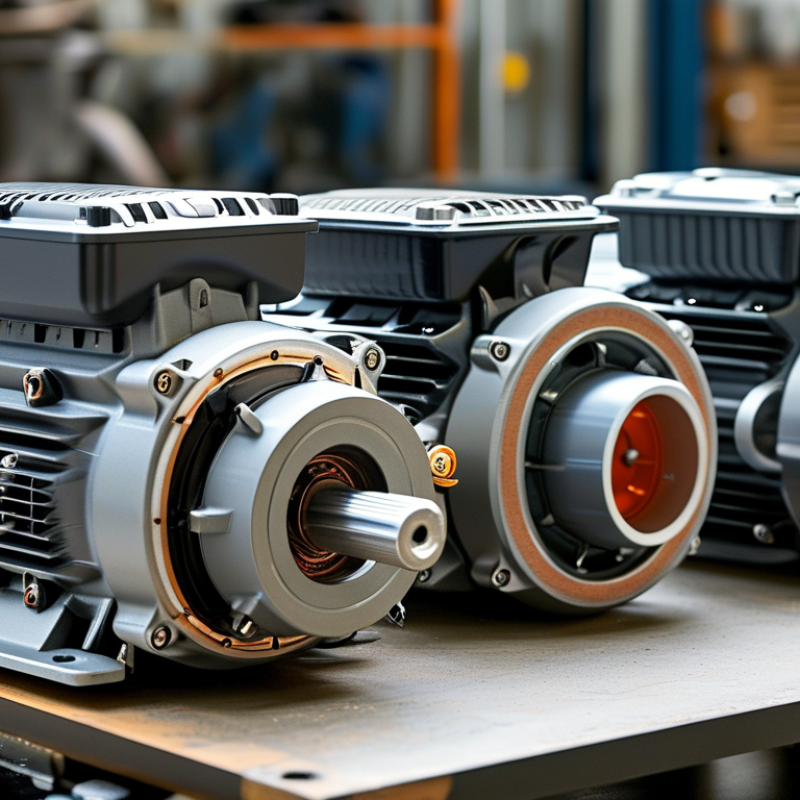
7 Best Permanent Magnet Motors for Global Buyers

Permanent Magnet Motor Basics and Operating Principles

A permanent magnet motor uses permanent magnets to create the rotor’s magnetic field. The stator contains copper windings arranged around the rotor. When controlled current enters these windings, it produces a rotating magnetic field. The rotor follows this field because opposite magnetic poles attract. This interaction creates torque without rotor windings or brushes.

The motor controller changes current timing as the rotor turns. Position sensors may provide rotor feedback, while sensorless control estimates position from back electromotive force. The controller must match voltage, current, speed, and load requirements. Poor timing can cause vibration, noise, or excessive heat. At higher speeds, back EMF limits the available voltage and may reduce torque.

Surface-mounted magnets suit many efficient, compact designs. Interior magnets can improve high-speed strength and allow reluctance torque. Selection depends on duty cycle, ambient temperature, overload demands, and required efficiency. In practical evaluation, engineers should record starting current, no-load speed, winding temperature, and vibration. Thermal behavior is easy to underestimate. Magnet strength can also decline when exposed to excessive heat, although the exact limit depends on the magnet material and motor structure. A careful test under real load often reveals weaknesses that a catalog rating hides.

Key Criteria for Comparing Motors in Global Markets

7 Best Permanent Magnet Motors for Global Buyers

Key Criteria for Comparing Motors in Global Markets

Comparing permanent magnet motors requires more than reading peak efficiency figures. Buyers should examine rated torque, speed range, overload capacity, and continuous duty performance. A motor that performs well in a laboratory may struggle beside a hot production line. Check the efficiency map, not only one impressive percentage.

Voltage compatibility matters across international projects. Confirm the motor, drive, connectors, and insulation system match the local power supply. Thermal limits deserve equal attention. Review cooling methods, ambient temperature ratings, enclosure protection, and allowable winding temperature. Dusty workshops and humid ports can expose weak designs quickly. Small details matter.

Ask for traceable test reports and clear tolerances. Reliable suppliers should provide drawings, material specifications, service intervals, and documented quality checks. Verify compliance with the destination market’s applicable electrical and safety requirements. Also compare delivery times, replacement parts, technical support, and warranty conditions. A lower purchase price can become expensive when spare parts are unavailable.

Do not overlook installation. Shaft alignment, cable length, braking needs, and controller settings affect real performance. For conveyors, pumps, and automated equipment, compare torque at the actual operating point. Noise and vibration should be measured under load. Sometimes, the quietest motor is not the most efficient choice. This is where judgment matters.

A useful comparison table can rank seven candidates by efficiency, thermal margin, serviceability, documentation, and total lifecycle cost. Yet no table replaces a site trial. Test assumptions, record failures, and leave room for revision. Even experienced buyers can weight the wrong criterion.

Seven Leading Permanent Magnet Motor Types and Their Strengths

Seven leading permanent magnet motor types offer different strengths for global buyers.

Surface-mounted permanent magnet synchronous motors deliver high efficiency and smooth torque in pumps, fans, and conveyors.

Interior permanent magnet motors tolerate higher speeds and provide strong overload performance, making them suitable for traction and industrial machinery.

Brushless DC motors offer compact construction, simple electronic commutation, and reliable operation in appliances and small automation systems.

Permanent magnet stepper motors provide accurate positioning without complex feedback in printers, valves, and light-duty equipment.

Axial-flux permanent magnet motors use a thin disc-like structure, which can reduce weight and improve torque density where space is limited.

Linear permanent magnet motors create direct motion without gears, supporting fast, precise transport systems.

Permanent magnet generators, while not conventional motors, are often selected alongside these systems because they produce stable power at variable speeds. Their value appears in wind, marine, and recovery applications.

Tips: Check voltage, duty cycle, cooling, encoder needs, and local certification requirements before purchasing. Ask for efficiency curves at real operating loads, not only peak ratings. Consider salt spray, dust, and temperature changes during overseas shipping and installation. No type wins every application. A clean specification sheet can still hide control or bearing problems. I would also compare service access, because a highly efficient motor becomes less attractive when repairs require uncommon tools or distant technical support.

Applications, Performance, and Industry Suitability

7 Best Permanent Magnet Motors for Global Buyers: Applications, Performance, and Industry Suitability

The best permanent magnet motor depends on load, speed, cooling, and service conditions. The IEA’s Energy Efficiency 2023 analysis indicates that electric motor systems consume roughly half of global electricity. Efficiency choices therefore affect both operating cost and emissions.

Interior permanent magnet motors suit electric vehicles, compressors, and machine tools. Their buried magnets support strong torque and wide speed control. Surface permanent magnet motors work well in pumps, fans, and conveyors with steady loads. Brushless DC motors fit compact appliances, drones, and small automation equipment. They offer simple electronic control, but acoustic noise can increase at high speed.

Permanent magnet synchronous motors deliver stable efficiency in elevators, robotics, and industrial pumps. Axial-flux designs reduce length and suit lightweight mobility systems, although cooling remains challenging. Permanent magnet-assisted synchronous reluctance motors use less magnet material and perform well in factory drives. Linear permanent magnet motors provide direct motion for semiconductor equipment and precision stages.

Field experience matters here. A motor that performs beautifully in a laboratory may struggle beside dust, heat, or frequent starts. The U.S. Department of Energy’s motor-system assessments stress that system efficiency includes controls, transmissions, and driven equipment. Buyers should check torque curves, demagnetization limits, ingress protection, and service access. Rare-earth supply risk also deserves attention. “Highest efficiency” is not always the lowest lifetime cost.

7 Best Permanent Magnet Motors for Global Buyers - Applications, Performance, and Industry Suitability
Motor Type Typical Power Range Typical Speed Range Typical Peak Efficiency Torque or Force Characteristics Main Advantages Important Limitations Common Applications Industry Suitability
Interior Permanent Magnet Synchronous Motor (IPMSM) Approximately 1 kW to 500 kW or more About 1,000 to 20,000 rpm, depending on design and field-weakening control Typically 92%–97% High torque density, strong overload capability, and wide constant-power speed range Excellent efficiency, compact size, good high-speed performance, and regenerative braking capability Requires an inverter and advanced control; rotor manufacturing is more complex; magnet temperature must be managed carefully Electric vehicles, traction systems, compressors, pumps, industrial servo drives, and high-speed machinery Best for transportation, premium industrial drives, and applications requiring high power density
Surface Permanent Magnet Synchronous Motor (SPMSM) Approximately 100 W to 500 kW About 100 to 6,000 rpm, with higher speeds possible in specialized designs Typically 90%–96% High continuous torque at low and medium speeds with smooth torque production Simple rotor construction, low torque ripple, high power factor, and excellent positioning accuracy Limited field-weakening range compared with IPMSM; magnets are more exposed to centrifugal and thermal stress Robotics, machine tools, pumps, fans, conveyors, textile machinery, and precision automation Best for constant-torque applications and precise motion systems operating within a moderate speed range
Brushless DC Motor (BLDC) Approximately 10 W to 30 kW About 500 to 15,000 rpm Typically 80%–93% Good starting torque and favorable power-to-weight ratio; trapezoidal back-EMF is commonly used Long service life, high reliability, compact construction, and relatively simple electronic commutation Torque ripple and acoustic noise can be higher than in sinusoidal PMSM designs; electronic control is required Cooling fans, pumps, drones, appliances, small electric vehicles, medical equipment, and battery-powered tools Best for compact battery-powered products and cost-sensitive equipment requiring low maintenance
Permanent Magnet Brushed DC Motor (PMDC) Approximately 1 W to 5 kW About 500 to 6,000 rpm Typically 70%–90% High starting torque and straightforward speed control through voltage regulation Low initial system cost, simple control electronics, and easy integration for low-power devices Brush and commutator wear, electrical arcing, audible noise, and limited service life in demanding environments Automotive actuators, office equipment, small conveyors, valves, toys, instruments, and portable mechanisms Best for low-power systems where simple control and low purchase cost are more important than maintenance-free operation
Axial-Flux Permanent Magnet Synchronous Motor Approximately 1 kW to 500 kW, depending on cooling and mechanical design About 500 to 8,000 rpm Typically 90%–97% High torque density with a short axial length and favorable low-speed torque capability Compact pancake-shaped form factor, reduced mass in some designs, and strong potential for high power density Air-gap control, thermal management, structural stiffness, and manufacturing tolerances can be demanding Electric vehicles, e-bikes, robotics, distributed drives, aircraft auxiliaries, and compact generators Best where installation length is restricted and high torque density justifies a more specialized mechanical design
Permanent Magnet Linear Synchronous Motor (PMLSM) Approximately 100 W to 100 kW equivalent continuous drive power Linear speed commonly 0.5 to 10 m/s; higher speeds are possible in specialized systems Typically 90%–97% Direct linear thrust, high acceleration, precise positioning, and no mechanical conversion from rotary motion High positioning accuracy, low mechanical backlash, fast response, and reduced wear in the drive train Higher initial cost, exposed magnetic track considerations, and sensitivity to installation alignment and contamination Machine tools, semiconductor equipment, packaging lines, pick-and-place systems, inspection equipment, and automated warehouses Best for high-speed precision motion where direct linear movement provides a clear productivity advantage
Permanent Magnet-Assisted Synchronous Reluctance Motor (PMa-SynRM) Approximately 5 kW to 500 kW About 1,000 to 18,000 rpm Typically 90%–97% Reluctance torque is combined with permanent-magnet torque to provide high efficiency and a wide operating range Can use less permanent-magnet material than many conventional PMSM designs, while offering good efficiency and field-weakening performance Rotor design and control are complex; torque ripple, acoustic noise, and magnet placement require careful optimization Industrial pumps, fans, compressors, machine tools, traction auxiliaries, and energy-efficient process equipment Best for industrial buyers seeking high efficiency and reduced magnet usage across variable-speed applications

Selection Factors for International Buyers and Suppliers

For international buyers, the seven best permanent magnet motors are not chosen by wattage alone. Compare surface-mounted, interior, synchronous, servo, high-speed, water-cooled, and integrated-drive designs against the actual duty cycle. The U.S. Department of Energy’s 2022 Motor Systems Market Assessment indicates that motor-driven equipment consumes more than half of industrial electricity in many facilities. Efficiency therefore affects operating cost, not just product labels. Check rated efficiency, torque at low speed, overload capacity, noise, and heat rise. A motor that performs well in a laboratory may struggle in a dusty factory at 45°C.

Export selection also requires measurable compatibility. Ask suppliers for IEC 60034 test records, efficiency data at partial load, insulation class, IP protection, and shaft tolerances. Confirm whether the controller supports the motor’s back-EMF profile. This detail is often missed. For coastal sites, review corrosion protection and cable sealing. For automated machinery, request rotor balance results and vibration limits. Suppliers should provide serial-level traceability, spare-part plans, warranty terms, and realistic lead times. ISO 9001 certification can support process reliability, but it does not replace independent performance testing.

Tips: Build a comparison sheet using the same load points, voltage, speed, ambient temperature, and duty cycle. Include freight packaging, customs documents, local service, and replacement time. IEC 60034-30-2 is useful for efficiency classification, yet buyers should verify the exact test method. I would also request a sample unit before bulk purchasing. It costs more initially, but one unexpected resonance can erase months of projected savings.

FAQS

What should buyers compare when evaluating permanent magnet motors?

Compare rated torque, speed range, overload capacity, efficiency maps, thermal limits, and continuous-duty performance. Peak efficiency alone can mislead.

Why is voltage compatibility important for international projects?

The motor, drive, connectors, and insulation must match the local power supply. Confirm voltage, frequency, cable length, and controller settings before installation.

How do cooling and environmental conditions affect motor selection?

Check cooling method, ambient temperature, enclosure protection, dust resistance, and humidity tolerance. A hot, dusty workshop can expose weak thermal designs quickly.

Which permanent magnet motor suits pumps, fans, and conveyors?

Surface-mounted synchronous motors suit steady loads and smooth operation. Measure torque at the actual working point, not only during testing.

When are interior permanent magnet motors a better choice?

They suit traction, compressors, machine tools, and industrial equipment requiring high speed or strong overload performance. Their buried magnets support wider speed control.

Where are brushless DC motors commonly useful?

They fit compact appliances, small automation systems, and lightweight equipment. Their electronic commutation is simple, but high-speed noise may increase.

What advantages do axial-flux and linear permanent magnet motors provide?

Axial-flux motors use a thin disc-like structure, helping reduce length and weight. Linear motors create direct motion without gears for precise transport.

What documents and support should buyers request?

Request drawings, material specifications, traceable test reports, efficiency curves, tolerances, service intervals, and quality records. Also check spare parts and technical support.

Does the most efficient motor always have the lowest lifetime cost?

No. Consider controls, cooling, installation, maintenance, replacement parts, and service access. A highly efficient motor may become costly when repairs need uncommon tools.

Should buyers conduct a site trial before making a final decision?

Yes, when practical. Record noise, vibration, temperature, starts, and failures under real loads. My weighting may still be wrong, so revise it.

Conclusion

A Permanent Magnet Motor uses magnetic fields created by permanent magnets to produce torque, offering efficient operation, compact construction, and reliable performance with reduced energy losses. This article explains the basic operating principles behind these motors and introduces key criteria for comparing them in global markets, including efficiency, torque density, speed range, thermal performance, control requirements, durability, maintenance needs, and total ownership cost.

It reviews seven leading permanent magnet motor types, highlighting the strengths and typical uses of each in areas such as industrial automation, electric mobility, pumps, compressors, renewable energy systems, robotics, and household equipment. The discussion also connects motor design with application demands, helping readers evaluate performance and industry suitability. For international buyers and suppliers, important selection factors include voltage compatibility, environmental conditions, manufacturing consistency, technical support, customization options, supply reliability, certifications, and long-term operating value.

Sophia

Sophia

Sophia is a dedicated marketing professional with an exceptional depth of knowledge about her company's products and services. With a keen understanding of market trends and customer needs, she crafts insightful blog posts that not only inform but also engage readers, enriching the company’s online......