The Brushless DC Motor has gained significant attention in modern technology. This motor type offers a range of advantages over traditional brushed motors. Its efficiency and longevity make it a popular choice in various applications, such as electric vehicles, robotics, and industrial machinery.
The operation of a Brushless DC Motor involves complex principles of electromagnetism. Unlike brushed motors, it uses electronic commutation to transfer power. This design minimizes friction and wear, which can lead to various mechanical failures over time. Users often find that these motors require less maintenance and have extended lifespans.
As we delve deeper into how Brushless DC Motors function, we realize their impact on energy consumption. Understanding these mechanisms can be crucial for engineers and hobbyists alike. However, challenges exist. Balancing performance with costs can be difficult. Additionally, the technology may be overwhelming for beginners. This exploration aims to clarify the workings of Brushless DC Motors and address common misconceptions.
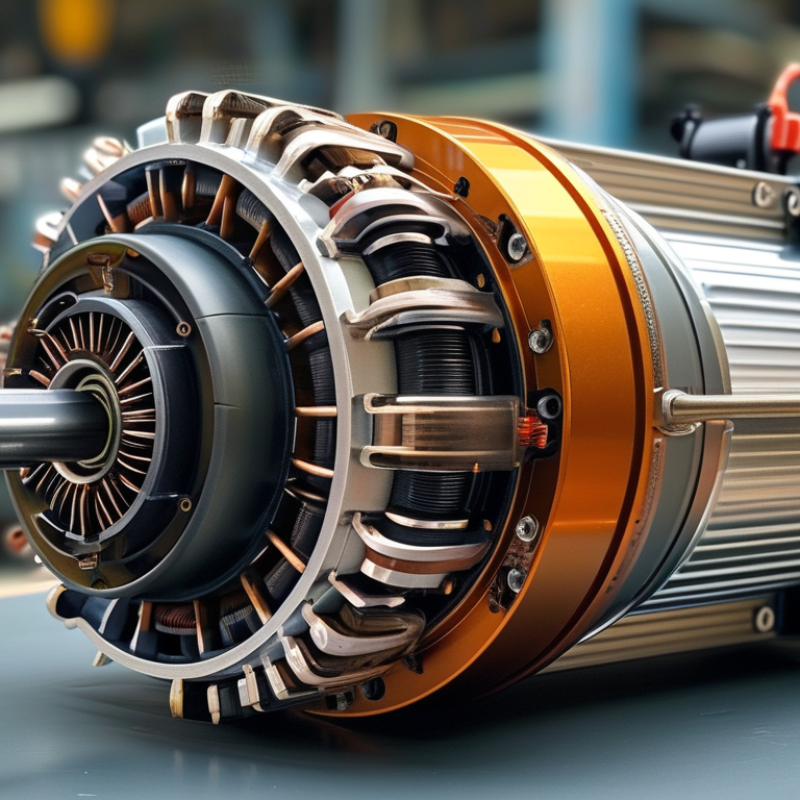
What is a Brushless DC Motor? Definition and Key Features
A brushless DC motor (BLDC) is an advanced electric motor designed for efficiency and longevity. Unlike traditional brushed motors, BLDC motors do not use brushes to transfer electricity. Instead, they rely on electronic commutation, which enhances performance. This design minimizes friction and wear, resulting in a longer lifespan and low maintenance requirements.
One of the key features of brushless DC motors is their high energy efficiency. These motors can convert a large portion of electrical energy into mechanical power. They also offer precise speed and torque control, making them ideal for applications ranging from electric vehicles to robotics. Another advantage is their ability to run quietly, which is beneficial in environments where noise reduction is essential.
Despite their advantages, brushless DC motors are not without challenges. The initial cost can be higher compared to brushed motors. Additionally, the complexity of the electronic control systems can pose difficulties in design and repair. This can be a barrier for some users. Understanding these factors is crucial for manufacturers and engineers looking to implement this technology effectively.
Basic Components of Brushless DC Motors: Stator, Rotor, and Commutator
Brushless DC motors (BLDC) are known for their efficiency and reliability. The three essential components of a BLDC motor are the stator, rotor, and commutator. The stator is the stationary part, comprising windings that create a magnetic field when energized. This field interacts with the rotor, which is the rotating part containing permanent magnets. This interaction enables smooth operation and reduces wear and tear compared to traditional brushed motors.
The commutator, while not present in brushless designs, should be noted. In conventional motors, it changes the direction of current. Instead, BLDC motors use electronic speed controllers to manage current flow. According to a recent report by Persistence Market Research, the demand for brushless motors is projected to grow at a CAGR of 7.4% from 2021 to 2031. This growth highlights the increasing reliance on energy-efficient solutions in various applications, from automotive systems to industrial machinery.
Despite the advantages, there are challenges. BLDC motors can be complex to design and integrate. The electronic controllers require precise engineering, which increases costs. Noise generated by these controls can also be a concern for certain applications. Understanding these nuances is crucial for engineers and designers working with BLDC motors. Balancing performance with potential drawbacks remains an ongoing challenge in this evolving field.
Brushless DC Motor Efficiency Levels
How Brushless DC Motors Operate: The Role of Electronic Controllers
Brushless DC motors (BLDC) have become increasingly popular in various applications due to their efficiency and performance. An essential component in these systems is the electronic controller, which plays a vital role in their operation. These controllers manage the motor speed and torque by sending precise signals to the motor's windings. According to a report by MarketsandMarkets, the global brushless DC motor market is expected to reach over $10 billion by 2025, driven primarily by automation and electric vehicles.
The electronic controller uses feedback mechanisms to adjust the motor's operation. Sensors monitor the motor's position and speed. This data allows the controller to adjust current flow, optimizing performance and minimizing energy waste. Reports indicate that BLDC motors exhibit up to 90% efficiency, significantly higher than traditional motors. This efficiency translates into lower operational costs, making them more appealing for industries aiming for sustainability.
Despite their advantages, brushless DC motors aren't without challenges. The complexity of electronic controllers can lead to higher initial costs. Repairing or replacing these controllers can be problematic, especially if specialized knowledge is required. Furthermore, not all applications can utilize BLDC motors effectively, especially where simplicity and low cost are paramount. Balancing performance with cost is a continuous debate within the industry.
Advantages Over Traditional DC Motors: Efficiency and Longevity Statistics
Brushless DC motors have gained attention for their efficiency and longevity, especially compared to traditional DC motors. These motors operate without brushes, reducing friction and wear. With fewer moving parts, they are less prone to mechanical failure. This design results in a significant increase in operational lifespan, a crucial factor in various applications, from electric vehicles to industrial machinery.
The efficiency of brushless DC motors is another noteworthy feature. They convert electrical energy to mechanical energy more effectively. Statistics show that they can achieve efficiency rates over 90%. In contrast, traditional motors typically reach around 75%. This means less wasted energy and lower operating costs. However, design and manufacturing complexity can lead to higher initial expenses.
Real-world experiences indicate that maintenance for brushless motors is minimal. Users report fewer repairs over time. This aspect can offset the initial purchase costs. Nevertheless, users should consider the specific needs of their applications. Brushless motors may not always be the best choice for every situation. Understanding different requirements is key to making an informed decision.
Applications of Brushless DC Motors in Various Industries and Technologies
Brushless DC motors have found extensive applications across various sectors due to their efficiency and reliability. In the automotive industry, they power electric vehicles, enhancing energy efficiency by up to 20%. This helps in reducing overall emissions, aligning with global sustainability goals. According to a recent report, the automotive sector's use of brushless DC motors is projected to grow at a rate of 10% annually.
In consumer electronics, these motors drive everything from computer cooling fans to drones. Their lightweight design and quiet operation make them ideal for personal gadgets. A report by a market research firm indicates that brushless DC motors accounted for over 30% of the market share in the electronics sector in 2022.
Moreover, the health technology industry utilizes brushless DC motors in medical devices like infusion pumps and imaging equipment. Their precision and reliability are critical in life-saving applications. Yet, manufacturers often face challenges regarding the complexity of design and integration. This raises questions about balancing innovation with practicality. Thus, as industries evolve, ongoing research is essential for overcoming these hurdles while maximizing the benefits of brushless DC motors.
FAQS
: A brushless DC motor is an electric motor that operates without brushes. It uses electronic commutation for efficiency.
They offer high energy efficiency, low maintenance, quiet operation, and precise speed control. This makes them ideal for various applications.
The initial cost can be higher than brushed motors. Complexity in design and repairs can also be a concern.
Electronic controllers manage motor speed and torque. They send signals to the motor, optimizing performance through feedback mechanisms.
They are used in automotive, consumer electronics, and health technology industries. Their efficiency and reliability make them valuable.
Brushless DC motors can exhibit up to 90% efficiency. This significantly reduces operational costs and energy waste.
Challenges include the complexity of design, integration issues, and high initial costs. Balancing performance with affordability is crucial.
Not always. Some applications require simpler, more cost-effective solutions, where BLDC motors may not be ideal.
They enhance energy efficiency in electric vehicles, reducing emissions and supporting sustainability goals.
They can be difficult to repair or replace, often requiring specialized knowledge. This could hinder their practical application.
Conclusion
A Brushless DC Motor (BLDC motor) is an advanced type of electric motor that operates without the friction and wear associated with traditional brushed motors. Its key features include a permanent magnet rotor and a stationary stator equipped with windings, eliminating the need for mechanical commutators. The operation of a Brushless DC Motor relies on electronic controllers that facilitate precise switching of the electrical currents in the stator, ensuring optimal motor performance and high efficiency.
One of the primary advantages of Brushless DC Motors is their superior efficiency and longevity compared to traditional DC motors, making them ideal for various applications across industries. They are extensively utilized in technologies ranging from electric vehicles to robotics and household appliances, showcasing their versatility and effectiveness in modern engineering solutions.

 DyneticPro Motor