Choosing a Precision Gear Motor manufacturer in China is not just a matter of comparing prices or scanning a product catalog. Buyers also need to consider torque range, gear ratio, motor type, noise, efficiency, and operating life. A unit driving a compact conveyor may face very different demands from one used in packaging equipment or a robotic joint. Small differences matter.
This guide introduces ten manufacturers for buyers who want a clearer starting point. It considers product focus, engineering capabilities, customization options, quality controls, and the availability of technical support. Where possible, company claims should be checked against product datasheets, certifications, factory information, and customer references. A polished website alone is not proof of reliable performance. That is not enough.
The right supplier depends on the application. A manufacturer suited to high-volume standard motors may not be the best fit for a low-noise, customized assembly. Compare rated torque and speed with the actual load, and ask how the supplier handles testing, lead times, and replacement parts. These details can reveal practical differences that a headline ranking misses. Still, rankings have limits. Product lines change, and public information can be incomplete. Use this list as a research aid, then verify the specifications and service terms directly before making a purchasing decision.
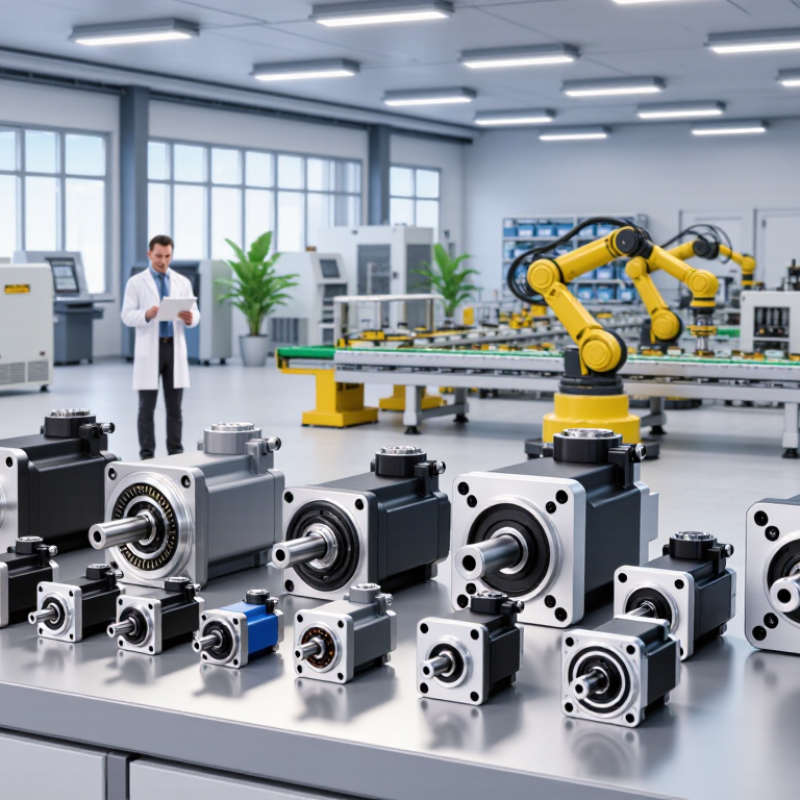
What Is a Precision Gear Motor and How Does It Work?
A precision gear motor combines an electric motor with a gearbox designed to control speed, torque, and movement. The motor creates rotation; gears adjust it for the task. A smaller output shaft may turn more slowly, but deliver more torque. This can help move a camera platform, a packaging arm, or a small conveyor with steady control.
Inside the gearbox, meshing teeth transfer rotation between shafts. The gear ratio determines how much the output speed changes and how torque is increased. Precision also depends on backlash, the small movement possible when gears change direction. In a workshop, that may show up as a slight pause before a positioning table responds. Small, but vital. Some systems pair the motor with an encoder, which reports shaft position to a controller. The controller can then correct movement when needed.
A precision gear motor is not automatically accurate in every setup. Mounting, load, temperature, and wear can all affect its behavior. A motor tested without a load may respond differently once it moves a heavy part. That detail is easy to overlook. Choosing one means checking required speed, torque, positioning accuracy, and operating conditions together. Even then, the result may need adjustment after installation. Gear teeth are precise, not magical.
Evaluating a precision gear motor manufacturer starts with the operating point, not a catalog headline. Ask for torque, speed, backlash, and efficiency data at the load your machine will actually use. A motor running a conveyor differs from one positioning a small inspection camera. Check whether test conditions are clearly stated. Numbers matter. Compare noise, temperature rise, and repeatability across several samples, not just one polished prototype. Small variations can become visible as vibration or positioning drift after installation.
Manufacturing discipline matters just as much as design. Review how gears are inspected, how parts are traced by batch, and whether assembly checks are documented. Ask about endurance testing and how failures are investigated. A useful supplier will explain trade-offs in plain language and request details about duty cycle, mounting, and the surrounding environment. Be cautious when every answer sounds perfect. A specification sheet cannot predict every real-world condition, and testing may reveal issues that were missed early. That is not automatically a red flag; the response to the finding matters. Look for clear evidence, practical corrective steps, and consistent communication before making a decision.
| Evaluation Dimension | What to Assess | Evidence to Request | Why It Matters |
|---|---|---|---|
| 1. Gearbox accuracy and backlash | Check positioning accuracy, repeatability, and backlash against the requirements of the application. Compare values only when the measurement method and operating conditions are the same. | Product datasheets, test reports, measurement definitions, and specified load and temperature conditions. | Backlash and transmission errors can affect positioning, motion smoothness, and repeatability. |
| 2. Rated torque and load capacity | Compare continuous and peak torque, allowable radial and axial loads, and any service-factor assumptions. | Torque curves, load limits, duty-cycle guidance, and application-specific sizing calculations. | A unit must withstand the real operating load without exceeding its thermal or mechanical limits. |
| 3. Speed range and efficiency | Review input and output speed limits, reduction ratios, and efficiency at the intended operating point. | Performance curves or test data showing the ratio, load, speed, and test conditions. | Efficiency and speed capability influence heat generation, energy use, and achievable machine cycle times. |
| 4. Thermal performance | Evaluate temperature rise and permissible duty cycle under the intended ambient temperature, load, and mounting conditions. | Thermal limits, duty-cycle recommendations, and test or application data. | Excessive heat can shorten lubricant and component life and may require a different size or operating profile. |
| 5. Noise and vibration | Compare noise and vibration data for equivalent configurations and test conditions; check for abnormal behavior across the operating range. | Measurement reports stating distance, speed, load, mounting, and measurement method. | Noise and vibration can affect operator comfort, product quality, and the performance of nearby equipment. |
| 6. Bearings, gears, and lubrication | Assess gear and bearing materials, lubrication type, sealing arrangement, and any maintenance requirements. | Technical drawings or specifications, lubricant guidance, service instructions, and warranty terms. | These design details influence wear, maintenance needs, and suitability for the operating environment. |
| 7. Motor and drive compatibility | Verify voltage, current, speed, control method, encoder options, brake requirements, and mechanical interfaces. | Motor and gearbox interface drawings, wiring information, encoder specifications, and drive compatibility details. | Compatibility reduces integration risk and helps ensure the motor, gearbox, and controller operate as a system. |
| 8. Environmental protection | Confirm protection against dust and water, operating-temperature range, corrosion considerations, and any special environmental requirements. | Ingress-protection rating documentation, environmental limits, and test records where applicable. | Environmental suitability depends on the installation and should be verified for the complete assembled product. |
| 9. Quality system and traceability | Review documented quality controls, inspection processes, calibration practices, and traceability of supplied products. | Current quality-management certificates where applicable, inspection records, and sample traceability documentation. | Consistent processes and traceability support repeatable production and investigation of quality issues. |
| 10. Delivery, support, and total cost | Compare quoted configuration, lead time, customization capability, technical support, warranty, and lifecycle costs. | Itemized quotations, delivery commitments, warranty terms, service information, and spare-parts availability. | The lowest purchase price may not represent the lowest overall cost if integration, downtime, or support needs are higher. |
Who are China’s top 10 precision gear motor manufacturers? The answer depends on what “top” means. A supplier with strong export records may not suit a compact medical instrument, while a smaller factory may excel at a specific torque range. Buyers should compare proven production capacity, engineering support, quality-control practices, and delivery consistency—not just catalog size.
Look for measurable details. Ask for rated torque, backlash, gear ratio, motor efficiency, noise levels, and expected service life. Request test reports and sample units, then check performance under your actual load and duty cycle. Good suppliers can explain how they select materials, inspect gears, and manage dimensional tolerances. Details matter.
A useful shortlist should also distinguish manufacturers from trading companies and confirm where assembly and testing occur. Visit facilities when practical, or request a live production walkthrough. Rankings still have limits. Public data may be incomplete, and marketing claims can be difficult to verify. Even experienced buyers sometimes overlook lead-time changes or customization costs. Compare several qualified suppliers against the same technical requirements before deciding.
Comparing China’s ten leading precision gear-motor manufacturers means looking beyond headline torque. IFR’s World Robotics 2024 report records 541,302 new industrial robot installations worldwide in 2023; China accounted for 276,288. That makes robot joints, automated guided vehicles, and packaging lines useful application benchmarks. Errors show quickly.
Compare rated torque, backlash, speed range, and repeatability under the same load and duty cycle. Ask for test conditions, not just catalog figures. Check whether thermal rise and noise were measured after sustained operation. The International Energy Agency’s 2011 motor-systems report estimates that motor-driven systems use about 46% of global electricity. Efficiency matters. But a high-efficiency figure alone says little about performance in a compact, frequently starting axis.
Manufacturers may differ in gear geometry, motor winding options, encoder integration, and tolerance control. Review sample test reports, production consistency data, and service response times. A quiet unit on a clean test bench may behave differently beside a hot, dusty production line. One caveat: public specifications are uneven, so comparisons can be less tidy than buyers expect. Requesting matched samples and testing them under one realistic operating profile gives a more dependable basis for judging capability.
In China, precision gear motors are used wherever equipment needs controlled speed, repeatable positioning, and steady torque. Industrial robots use them in joints and compact handling units; factories also install them in conveyors, packaging lines, machine tools, and inspection equipment. IFR’s World Robotics 2024 report recorded 276,288 industrial robot installations in China in 2023, around 51% of global installations. That scale signals a large automation market, though robot installations do not directly measure gear motor sales.
Automotive production is another important application. The China Association of Automobile Manufacturers reported 30.16 million vehicles produced in 2023. In assembly plants, gear motors can drive parts feeders, transfer systems, and adjustable workstations. Food processing and textile facilities also rely on them for metered filling, belt movement, and controlled winding. Small details matter: a motor that runs too fast can misplace a component or disrupt a packaging cycle. A limitation matters. Public industry reports rarely separate precision gear motors from broader motor and automation categories, so exact sector demand remains difficult to verify. The strongest practical choice depends on load, duty cycle, required positioning accuracy, and the surrounding machine.
Start with the real operating point: required torque, speed, backlash, and efficiency under the machine’s actual load. A catalog headline is not enough.
Results can change with load and duty cycle. Ask how noise, temperature rise, and repeatability were measured. Compare several samples, not one polished unit.
Ask how gears are inspected, batches traced, and assembly checks recorded. Request endurance-test details and examples of how failures were investigated. These details matter.
A capable supplier may ask about duty cycle, mounting, and nearby heat, dust, or vibration. That conversation can expose fit problems early.
Give each candidate the same torque, backlash, gear-ratio, noise, and service-life requirements. Request reports and sample units, then test them under your own load.
Ask where assembly and testing happen, and whether production capacity is documented. A facility visit or live walkthrough can clarify the answer. Public information may still be incomplete.
Uses include robot joints, conveyors, packaging lines, machine tools, inspection equipment, automotive assembly, food processing, and textile production. A filling line needs steady metering; a winding station needs controlled movement.
A 2024 robotics report recorded 276,288 industrial robot installations in China in 2023, about 51% of global installations. That signals market scale, not gear motor sales directly.
Not automatically. Look for clear evidence, practical corrective steps, and steady communication. Specifications cannot predict every installation; early assumptions can be wrong.
This article explains what a Precision Gear Motor is and how its motor and gearbox work together to deliver controlled speed, torque, and motion accuracy. It also outlines the key factors used to evaluate manufacturers in China, including engineering expertise, product range, manufacturing consistency, customization options, quality control, and technical support.
The article compares manufacturers’ capabilities in general terms, helping readers understand how gear designs, performance specifications, and production strengths may differ. It also explores the industries that use Precision Gear Motor systems, such as robotics, automation, packaging, medical equipment, and precision machinery. Together, these topics provide a practical framework for assessing products and matching motor performance to application requirements.

DyneticPro Motor