Choosing the right DC motor for your project is vital for success. In 2021, the global DC motor market was valued at over $13 billion. This figure is expected to grow due to increased automation across industries. Understanding how to select the best DC motor can impact performance and efficiency.
When selecting a DC motor, consider application requirements. Different motors offer varied torque, speed, and power ratings. Reports indicate that brushless DC motors are becoming more popular, known for their longevity and efficiency. However, brushed motors still hold considerable market share, particularly in cost-sensitive projects.
Quality matters in the selection process. Not all motors are created equally, and the right specifications can make a noticeable difference. It's essential to evaluate suppliers and their offerings. Industries rely on reliable data when making decisions, making it crucial to know your source. While the choice may seem overwhelming, reflecting on specific project needs simplifies the process.
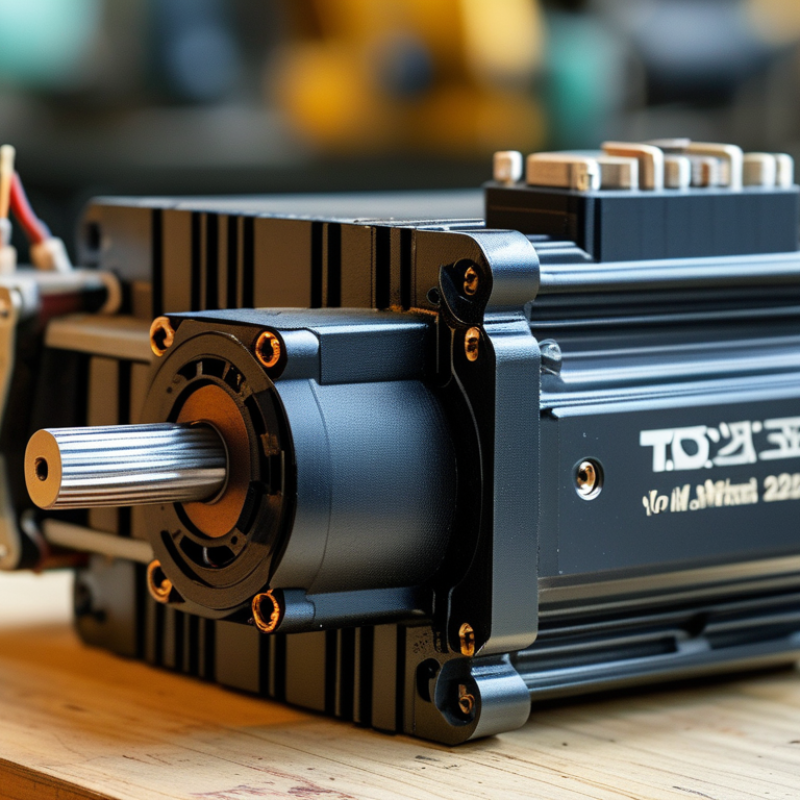
DC motors are vital in many applications, from robotics to household appliances. Understanding their basics is crucial for making informed decisions. A DC motor operates on direct current, converting electrical energy into mechanical energy. They vary in size and power, catering to different project demands. The fundamental types include brushed and brushless motors. Brushed motors are simpler and more affordable, while brushless motors are more efficient and durable.
Choosing the right motor involves considering factors like voltage, torque, and speed. Voltage affects performance; higher voltage motors typically run faster. Torque is essential for applications requiring heavy lifting. Speed control is vital for precision tasks. It's not unusual for project designers to underestimate these requirements. Real-world testing often reveals unexpected power needs or performance gaps.
Applications extend from electric vehicles to medical devices. Each use case presents unique challenges. For example, a robotic arm might need precise torque for delicate tasks. Yet, in some scenarios, a motor may underperform. It's essential to revisit designs and revise specifications based on thorough testing and feedback. Understanding these fundamentals helps ensure that decisions align with project objectives.
| Motor Type | Rated Voltage (V) | Rated Speed (RPM) | Torque (Nm) | Application |
|---|---|---|---|---|
| Brushed DC Motor | 12 | 3000 | 0.5 | Robotics |
| Brushless DC Motor | 24 | 4000 | 0.8 | Drones |
| Coreless DC Motor | 6 | 20000 | 0.1 | Microcontrollers |
| Geared DC Motor | 12 | 150 | 3 | Conveyor Systems |
| High Torque DC Motor | 48 | 1000 | 5 | Industrial Applications |
When selecting a DC motor for your project, understanding key specifications is crucial. The voltage rating defines the power supply needed. Common ratings are 6V, 12V, and 24V. Make sure your power source matches the motor voltage. An incorrect voltage can lead to inefficiency or damage.
Speed and torque are equally important. Speed is measured in RPM (revolutions per minute). Torque, on the other hand, determines how much load the motor can handle. For instance, if you need to lift a weight, torque becomes your priority. A motor's datasheet provides detailed specifications.
Tips: Always check the motor's duty cycle. It tells how long the motor can run before needing a cooldown period. Also, consider the size and weight of the motor in your design. A motor that is too large may disrupt balance. Re-evaluating after initial tests can highlight adjustments needed for optimal performance. Test different motors before finalizing your choice for the best fit.
When selecting a DC motor, torque and speed are vital. Understanding these requirements can significantly impact your project’s efficiency. Torque is the rotational force. If a motor produces low torque, it may struggle to start or sustain movement. This is critical in applications like robotics or vertical lifts where power is essential. For instance, lifting heavy objects demands a motor that can handle high torque.
Speed is another key element. It refers to how fast a motor spins. Some projects require high-speed motors for quick responses, while others benefit from slower, more controlled movements. For example, in automated assembly lines, rapid rotation is preferred. If the speed is too high, precision may be compromised. Balancing torque and speed is not always easy. You may find that optimizing one could reduce the other. Evaluating your specific needs is essential, as real-world conditions can vary.
Practical testing can clarify the ideal torque and speed ratios for your situation. Sometimes, calculations alone do not provide the full picture. Different applications may yield unexpected results due to friction or load inconsistencies. Gathering feedback from prototypes can lead to better-informed decisions. Only through trial and error can you pinpoint the right motor for your application. Reflect on these factors as you refine your choice.
Selecting the right voltage and power rating for your DC motor is crucial for project success. The voltage directly influences the motor's speed and torque. Most DC motors operate within a range of 5V to 48V. A report from the International Electrotechnical Commission (IEC) states that using the wrong voltage can lead to motor failure or inefficient operation. Understanding your project’s requirements will guide your choice.
Power rating is another vital factor. It indicates how much power the motor can deliver. A higher power rating means greater torque and speed capabilities but also more energy consumption. According to a survey by the American National Standards Institute (ANSI), selecting motors that exceed power needs can waste energy and increase operational costs. Conversely, undervalued motors might underperform.
Tip: Always assess your project’s load requirements before selecting a motor. This ensures efficiency and compatibility.
Calculating the power needed often involves understanding the load type and dynamics. Use a power calculator to obtain precise estimates.
Tip: Consult data sheets carefully to match voltage and power rating specifications. This will prevent potential performance issues and improve reliability. Always be ready to adjust specifications based on real-world performance feedback.
When designing a project that involves a DC motor, selecting the right motor control option is critical. The type of control used can greatly impact performance. Common methods include pulse-width modulation (PWM) and current control. Each method has distinct advantages and challenges.
PWM is efficient and widely used in many applications. However, it may introduce noise, which can be problematic in sensitive environments.
Integration is another key factor to consider. It involves combining the motor with other components. For instance, sensors can provide feedback to improve precision. However, integrating too many components can complicate design. Maintaining simplicity is essential for reliability. You may need to iterate on your design, as initial choices may not work as expected.
Testing and validation are essential in the integration phase. Run tests to see how the motor performs with your control options. If issues arise, you may need to reassess your approach. Real-world conditions may differ from theory. This unpredictability is common in engineering projects. Emphasizing flexibility and adaptability can lead to better outcomes. Crafting a motor controller that truly suits your needs requires patience and experimentation.
: DC motors are used in various applications, including robotics and household appliances.
DC motors convert electrical energy into mechanical energy using direct current.
Brushed motors are simpler and cheaper, while brushless motors are more efficient and durable.
Voltage affects performance. Higher voltage motors typically run faster, impacting project outcomes.
Torque determines how much load a motor can handle. It’s crucial for heavy lifting tasks.
The duty cycle indicates how long a motor can run before it needs to cool down.
Testing different motors before making a decision helps pinpoint the best fit for your project.
Real-world factors like friction and load inconsistencies can lead to unexpected performance issues.
Optimizing one could reduce the other. Reflect on your project’s needs and test accordingly.
Calculations alone may not provide the complete picture. Testing clarifies the ideal specifications needed.
When selecting a DC motor for your project, it is essential to understand the fundamental principles of how these motors operate and their various applications. DC motors are widely used in industries ranging from robotics to automotive, making it crucial to evaluate the specific requirements of your project. Key specifications such as torque, speed, voltage, and power rating should be carefully considered. Torque and speed requirements will dictate the type of motor needed to achieve optimal performance.
Additionally, integrating the motor into your design involves assessing control options and compatibility with other components. Understanding these factors ensures that you choose a DC motor that not only meets the technical specifications but also aligns with your project's overall design and functionality. By thoroughly evaluating these aspects, you can effectively select the right DC motor to enhance your project's success.

DyneticPro Motor