Choosing a High Efficiency Motor is not just a matter of selecting the highest efficiency number on a catalog page. The right choice depends on the machine it drives, its operating hours, load profile, supply conditions, and maintenance needs. Energy-efficiency expert Amory Lovins is often quoted as saying, “The cheapest energy is the energy you don’t use.” For motor buyers, that idea points to a practical question: how much energy could a better-matched motor save over its working life?
A useful comparison starts with the nameplate and the real operating conditions. Check rated power, speed, torque, voltage, enclosure, and duty cycle. Then compare efficiency classes using the standard applicable in your region. A motor running for long shifts at a steady load may justify a higher purchase price through lower energy use. A lightly loaded motor may not. Small details matter. A variable-frequency drive can help control speed, but compatibility and the application’s torque requirements need checking. Installation, alignment, cooling, and maintenance also affect performance. Not always.
This guide explains how to assess efficiency ratings, estimate lifecycle costs, and match a motor to its workload. It also highlights common purchasing mistakes, including oversizing based only on a safety margin. Real operating data is valuable, though it is not always available. In that case, assumptions should be stated and reviewed before purchase. A high rating is a useful starting point, not a complete decision. The best motor is the one that reliably meets the application’s needs while reducing avoidable energy use.
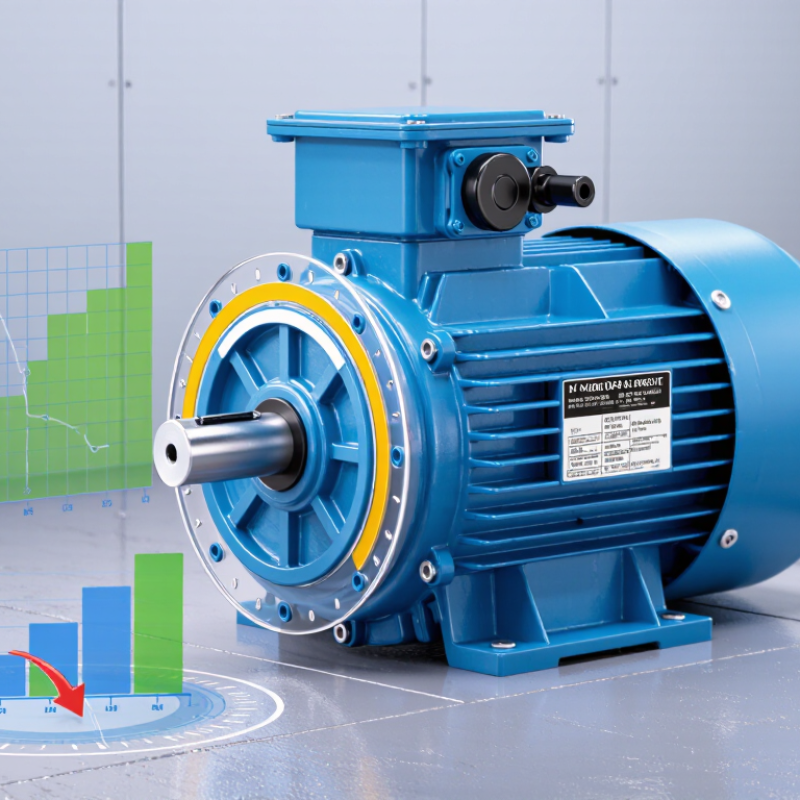
Define the Motor’s Load, Duty Cycle, and Operating Requirements
How to Choose a High Efficiency Motor?
Define the Motor’s Load, Duty Cycle, and Operating Requirements
Start with the work the motor must perform, not its nameplate rating alone. Record shaft speed, torque, and load changes across a typical shift. A conveyor may run steadily, while a pump cycles often or faces changing pressure. Small details matter. The U.S. Department of Energy’s Improving Motor and Drive System Performance: A Sourcebook for Industry reports that motor-driven systems use about 70% of industrial electricity. That makes correct sizing important: an oversized motor may spend much of its time lightly loaded, where its efficiency can fall.
Next, describe the duty cycle: hours per day, starts per hour, and time spent at each load. The International Energy Agency’s 2011 report on electric motor-driven systems estimates that these systems consume about 45% of global electricity. Compare motor efficiency at the loads you actually expect, rather than relying only on peak efficiency. Check required starting torque, speed control, supply conditions, and the surrounding temperature. Dust, heat, or frequent starts can affect performance and maintenance needs. A neat load estimate can still miss short peaks; measure a real operating cycle when possible. If the process varies, leave room to question assumptions before specifying the motor.
Compare Efficiency Standards and Motor Performance Ratings
Choosing a high-efficiency motor starts with comparing like-for-like ratings. IEC 60034-30-1 defines efficiency classes from IE1 to IE4 for many line-operated motors; a higher class generally means lower tested losses, not guaranteed savings in every installation. The International Energy Agency’s 2011 report, Energy-Efficiency Policy Opportunities for Electric Motor-Driven Systems, estimates these systems use 43–46% of global electricity. Small efficiency gains can matter at scale. Still, a motor running lightly loaded may not deliver the expected return.
Check the nameplate power, speed, voltage, duty cycle, and efficiency class against the actual machine load. Compare values tested under the same standard and operating conditions. For variable-speed applications, assess the motor and drive together, including low-speed cooling and system losses. An IE4 rating alone cannot tell you the annual energy bill; operating hours and load profile matter. This part is often overlooked.
Tips: Record current, load, and running hours before replacing a motor. Ask for the test standard and rated-load efficiency, then estimate annual energy use using your local electricity tariff. Leave room for uncertainty: real loads fluctuate, and field measurements may be imperfect.
How to Choose a High Efficiency Motor? - Compare Efficiency Standards and Motor Performance Ratings
Compare motor efficiency classes alongside the operating conditions and performance details that affect real-world energy use. The efficiency figures below apply to a specific standardized example, not to every motor in that class.
| Efficiency Class |
Common Description |
Minimum Full-Load Efficiency |
Estimated Annual Energy Saving vs. IE1 |
Selection Consideration |
| IE1 |
Standard Efficiency |
87.0% |
Baseline |
May have a lower purchase price, but generally uses more electricity for the same mechanical output. |
| IE2 |
High Efficiency |
89.6% |
About 1,000 kWh |
Compare the purchase premium with expected operating hours and local electricity costs. |
| IE3 |
Premium Efficiency |
91.7% |
About 1,763 kWh |
Often a practical choice for motors that run frequently or for long periods. |
| IE4 |
Super Premium Efficiency |
93.6% |
About 2,432 kWh |
Can reduce operating energy further; check motor cost, starting behavior, and drive compatibility. |
| IE5 |
Ultra-Premium Efficiency |
Not specified in this comparison |
Not calculated |
Confirm the applicable standard edition and the manufacturer’s test data before comparing an IE5 claim. |
Efficiency data basis: Minimum full-load values shown for a 7.5 kW, four-pole, 50 Hz motor, based on IEC 60034-30-1:2014 class limits. Efficiency limits vary by rated output, number of poles, and supply frequency. The IE5 class had no numerical limits specified in that edition. Annual savings are estimates for 7.5 kW shaft output operating at full load for 4,000 hours per year; they compare calculated input energy using the efficiencies above and do not include electricity tariffs or part-load effects.
Performance Ratings to Check Before Choosing
| Rating or Parameter |
What It Tells You |
How to Use It in Selection |
| Rated output (kW) |
The mechanical power the motor is designed to deliver at its rated operating conditions. |
Match the motor to the driven load; avoid oversizing without a clear starting or load requirement. |
| Efficiency at load |
The share of electrical input converted into mechanical output at a stated load point. |
Compare efficiency at the load the motor will actually experience, not only at full load. |
| Power factor (cos φ) |
Indicates how effectively the motor draws useful active power from the AC supply. |
Check against the electrical system and assess reactive-power requirements where relevant. |
| Rated voltage and frequency |
The supply conditions for which the motor is rated. |
Confirm compatibility with the site supply and any variable frequency drive. |
| Rated speed and pole count |
Indicates the motor’s operating speed; actual speed under load is slightly below synchronous speed for an induction motor. |
Match motor speed to the required process speed, gearing, and driven equipment. |
| Starting torque and current |
Describes the motor’s ability to start the load and the electrical demand during startup. |
Check whether the load starts under pressure and whether the supply and protection system can handle starting current. |
| Duty rating and operating hours |
Describes the intended operating cycle and how long the motor runs. |
Use actual run time and load profile when estimating energy savings and payback. |
| Enclosure and cooling |
Describe protection against the environment and the method of heat removal. |
Select for dust, moisture, ambient temperature, installation location, and required ingress protection. |
Practical tip: The most suitable motor is the one that meets the load, supply, speed, starting, and environmental requirements while operating efficiently at its actual load. Verify efficiency-class claims and test conditions on the motor documentation.
Select a Motor Type and Match Its Power and Speed
Choosing a high-efficiency motor starts with the load, not the nameplate alone. For steady-speed pumps or fans, a three-phase induction motor is often practical. Frequent speed changes may call for a variable-frequency drive and a motor rated for that duty. Check torque across the full operating range, start frequency, ambient temperature, and supply voltage. A motor can be efficient on paper yet waste energy when oversized or lightly loaded.
Record shaft power, peak torque, and operating hours; do not size from a brief startup spike alone. The U.S. Department of Energy’s 2014 sourcebook, Improving Motor and Drive System Performance, reports a striking figure: motor-driven systems account for about 68% of U.S. manufacturing electricity use. Compare efficiency at expected load, not only at full load, and verify speed against required flow or cycle time. IEC 60034-30-1 efficiency classes offer a consistent basis for comparing rated efficiencies. Still, a tidy spreadsheet can miss changing loads during a real shift.
Tips: Measure before buying. Check current and speed under normal production. Revisit your assumptions after installation; actual loads can surprise you.
Assess Compatibility with the Power Supply and Drive System
Choosing a high-efficiency motor means checking whether it suits the available power supply. Confirm the supply voltage, number of phases, and frequency against the motor nameplate. A 230-volt, three-phase motor will not run properly from a single-phase supply without suitable equipment. Small mismatches matter. Also compare the motor’s full-load current with the wiring, protection, and control equipment already installed.
Check the drive system, too. A variable-frequency drive must support the motor’s voltage, current, and power rating. Its overload capacity should match the application, especially when the motor starts under load or accelerates frequently. For variable-speed operation, confirm that the motor can handle the drive’s output and the required speed range. Low-speed cooling may be inadequate with a standard fan. This detail is easy to miss. A tidy specification sheet can still overlook real operating conditions, so verify the setup with a qualified technician and the equipment documentation.
Tips: Record supply voltage at the motor terminals during operation, not only at the panel. Check cable length and drive settings; both can affect performance. If readings vary, investigate before selecting a replacement.
How to Choose a High-Efficiency Motor: Check Power Supply and Drive Compatibility
Representative nominal pairings are shown: 208 V systems with 200 V motors, 400 V systems with 400 V motors, and 480 V systems with 460 V motors. Before selecting a motor, confirm that the drive’s input and output voltage, phase, frequency, and current ratings suit both the supply and the motor nameplate. Check the drive and motor manufacturers’ specifications for the actual installation.
Evaluate Operating Conditions, Maintenance, and Lifecycle Costs
A high-efficiency motor should fit the job it will actually perform. Record the load, operating hours, starts per hour, and supply conditions before comparing models. A pump running near full load has different needs from a fan that spends most of the day throttled back. Check the efficiency curve at the expected load, not just the rated point. Dust, heat, moisture, and restricted airflow can also affect performance and service life. Small details matter. A motor installed in a hot, poorly ventilated room may not deliver the savings shown in a catalogue.
Maintenance needs belong in the decision, too. Ask whether technicians can inspect bearings, check alignment, and access lubrication points without moving nearby equipment. Vibration readings and temperature checks can reveal developing problems, but only if someone records them consistently. Not always. Maintenance plans often look better on paper than in a busy plant. Estimate lifecycle cost using purchase price, energy use, planned service, and possible downtime. Compare those costs over the expected service period, using local electricity rates and realistic operating hours. If a variable-speed drive is involved, include its losses and control settings. A careful estimate may still miss changing production demands, so leave room to review the choice after installation.
Conclusion
Choosing a High Efficiency Motor begins with understanding the work it must perform. Define the load, required torque and speed, operating hours, and duty cycle so the motor can handle both normal operation and peak demands without being oversized. Compare efficiency ratings and performance data under realistic conditions, including how efficiency may change with load. Then select a motor type and match its power and speed to the application, allowing for any starting or acceleration requirements.
Next, confirm that the motor is compatible with the available power supply and any control or drive system. Consider the installation environment, such as temperature, dust, moisture, and ventilation, and choose a design suited to those conditions. Finally, assess maintenance needs and total lifecycle costs, including energy use, service, and expected operating life. A careful evaluation of these factors helps balance reliable performance, efficiency, and long-term value.

 DyneticPro Motor