Top Gear Reduction Motor Suppliers for Global Buyers

Time:2026-09-18 Author:Mason
0%

Choosing a Gear Reduction Motor supplier can shape an entire machine’s performance. Global buyers need more than a low unit price. They need dependable torque, stable speed control, accurate documentation, and responsive technical support.

Dr. Heinz P. Bloch, a respected machinery reliability authority, states, “Reliability is the probability that a component or system will perform its intended function for a specified period of time.” This principle matters on a factory floor. A motor may look suitable on paper, yet fail under dust, heat, shock loads, or frequent starts. Practical evaluation must include gearbox design, reduction ratio, rated torque, service factor, motor efficiency, sealing, noise, and thermal limits. Supplier experience matters too. Ask for test reports, dimensional drawings, duty-cycle guidance, and documented quality procedures.

The strongest suppliers explain their limits clearly. That builds trust. They should also support voltage compatibility, international shipping, spare parts, warranty handling, and local compliance requirements. A serious supplier will not promise the same motor for every conveyor, mixer, lift, or packaging line. That assumption is convenient, but incomplete. Real applications differ.

This guide examines leading Gear Reduction Motor suppliers for global buyers. It considers engineering capability, customization, production consistency, certifications, delivery reliability, and after-sales service. Some rankings may remain imperfect because supplier data changes. Buyers should verify current specifications directly. One overlooked detail can matter: a slightly undersized gearbox may run quietly during testing, then overheat after months of continuous operation. The right choice is not merely a motor that turns. It is a supplier and system that continue working when production becomes demanding.
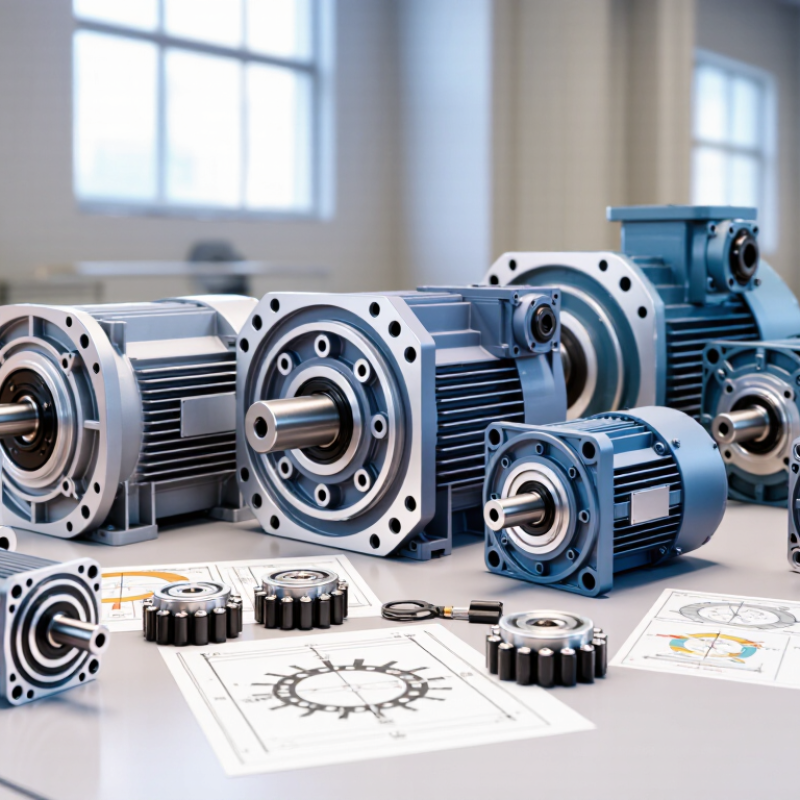
Top Gear Reduction Motor Suppliers for Global Buyers

What Is a Gear Reduction Motor and How Does It Work?

A gear reduction motor combines an electric motor with a gearbox. The motor creates speed and rotation. The gearbox lowers speed and increases usable torque. Inside, several gears transfer motion through different diameters. A small gear drives a larger gear, producing mechanical advantage. The output shaft then turns more slowly, but with greater force. This arrangement suits conveyors, lifting equipment, automated doors, and compact industrial machines.

The operating principle is simple, yet selection is not. According to the International Energy Agency’s Energy Efficiency 2016 report, electric motor systems consume about 46% of global electricity. Efficient motor and gearbox matching can therefore reduce wasted energy. Buyers should check rated torque, output speed, duty cycle, starting load, and thermal limits. Gear ratio alone does not guarantee performance. A heavily loaded gearbox may overheat, even when its catalog rating appears sufficient. This is where practical testing matters. The simplified explanation has limits.

Tips: Ask suppliers for efficiency data, noise readings, service-factor details, and dimensional drawings. Confirm whether the motor supports continuous operation. Inspect lubrication requirements and shaft alignment tolerances. IEC 60034-30-1 efficiency classes provide a useful comparison for many motor types. However, test conditions can differ between suppliers, so compare identical operating points. Request sample testing when the motor will run daily, under dust, moisture, or frequent starts. A small mismatch can become a costly fault.

Key Types of Gear Reduction Motors for Industrial Applications

Key Types of Gear Reduction Motors for Industrial Applications

Gear reduction motors combine an electric motor with a gearbox to deliver slower speed and higher torque. Their design affects efficiency, noise, maintenance, and service life. Global buyers should match the motor type with the actual machine load, not only the catalog ratio.

Helical gear motors suit conveyors, mixers, and packaging lines because their angled teeth provide smooth, quiet power transfer. Spur gear motors are simpler and cost-effective for lighter loads, though they may produce more noise. Worm gear motors offer high reduction ratios and compact right-angle installation. They can also generate more heat during continuous operation. Bevel gear motors work well when shafts must turn through 90 degrees while retaining good efficiency. Planetary gear motors provide high torque in a compact housing, making them useful for robotics and precision equipment. I have seen selection errors happen when peak torque replaces continuous torque in calculations. That shortcut can shorten gearbox life.

Tips: Check duty cycle, starting load, shaft position, ambient temperature, and required braking. Ask suppliers for service-factor data, efficiency curves, noise ratings, and ingress protection details. Confirm mounting dimensions before ordering. A small mismatch can delay a whole production line. Also inspect lubrication requirements and replacement-part availability. Cheap initial pricing may hide frequent maintenance costs. Performance records from similar applications are more useful than polished claims, but they are not perfect substitutes for site testing.

How to Evaluate Gear Reduction Motor Suppliers Worldwide

How to Evaluate Gear Reduction Motor Suppliers Worldwide

Choosing gear reduction motor suppliers requires more than comparing online prices. A reliable evaluation starts with technical fit. Check rated torque, reduction ratio, motor speed, duty cycle, noise, and thermal limits. Ask whether the supplier can provide load calculations and test data. Request drawings with shaft dimensions, mounting details, and allowable radial loads. Small mismatches can stop an entire assembly line.

Experience matters during real production. Examine sample quality, inspection records, material traceability, and consistency between batches. A capable supplier should explain its gear materials, lubrication method, sealing design, and endurance testing. Review quality certifications, but do not treat certificates as proof of perfect performance. Audit reports and customer references often reveal more. Communication also matters across time zones. Slow answers may become expensive delays.

Tips: Request two samples before placing a large order. Test them under your actual load and operating cycle. Confirm delivery capacity, spare-part support, warranty terms, and technical response times in writing. Ask how failures are investigated, not only how products are promoted. No supplier is flawless. Even experienced teams can miss vibration, heat, or alignment issues during selection. Leave room for corrective testing, because real machinery often behaves differently from laboratory conditions.

Top Gear Reduction Motor Suppliers for Global Buyers - How to Evaluate Gear Reduction Motor Suppliers Worldwide
Supplier Profile Primary Manufacturing Region Common Gear Motor Types Typical Rated Power Range Typical Output Torque Range Common Reduction Ratios Typical Efficiency Range Standard Protection Level Quality and Compliance Evidence Typical Sample Lead Time Typical Production Lead Time Customization Capability Global Buyer Evaluation
Profile A East Asia AC induction gear motors; helical gear motors 0.09–7.5 kW 5–1,500 N·m 3:1–300:1 72%–91% IP54–IP65 ISO 9001-based quality system; CE documentation commonly available; request test reports for each model 2–4 weeks 4–8 weeks High: shaft, flange, brake, voltage, cable, encoder, and ratio options Strong cost-to-volume option
Profile B South Asia Worm gear motors; small AC and DC gear motors 0.025–3.0 kW 2–650 N·m 5:1–3,600:1 55%–86% IP44–IP65 Request ISO 9001 certificate, insulation-class data, routine test records, and applicable export documents 3–5 weeks 6–10 weeks Medium to high: mounting dimensions, gearing, brake, and terminal-box changes Suitable for price-sensitive applications
Profile C Western Europe Helical-bevel; parallel-shaft; inline helical gear motors 0.12–45 kW 20–8,000 N·m 4:1–500:1 82%–96% IP55–IP66 Traceable production controls; EU conformity documentation; request declaration of conformity and motor efficiency data 4–8 weeks 8–14 weeks Medium: strong engineering support but higher tooling and validation requirements Strong option for demanding industrial duty
Profile D North America AC gear motors; planetary gear motors; servo gearboxes 0.18–30 kW 15–6,000 N·m 3:1–1,000:1 78%–95% IP54–IP67 Request UL/CSA-related evidence where required, motor data sheets, thermal limits, and documented factory testing 3–6 weeks 6–12 weeks High: controls integration, brakes, feedback devices, and application-specific mounting Good fit for regulated local installations
Profile E Japan and South Korea Precision planetary; servo gear motors; compact geared motors 0.01–15 kW 0.5–3,500 N·m 4:1–1,000:1 80%–97% IP40–IP67 Detailed accuracy, backlash, noise, and life-test specifications; confirm regional certification coverage 4–8 weeks 8–16 weeks High precision customization; engineering approval may be required Best for precision motion and low backlash
Profile F Eastern Europe and Türkiye Helical; bevel; worm; heavy-duty geared motors 0.12–90 kW 25–15,000 N·m 4:1–1,500:1 75%–95% IP55–IP66 Request ISO 9001 evidence, gear-material specifications, heat-treatment records, and conformity documentation 4–7 weeks 8–14 weeks Medium: broad mechanical options with project-based engineering support Balanced option for heavy industrial equipment
Profile G Southeast Asia Small AC, DC, and planetary gear motors 0.006–2.2 kW 0.3–450 N·m 5:1–2,000:1 60%–90% IP20–IP65 Verify production-site certification, insulation testing, EMC results, and consistency between samples and mass production 3–6 weeks 6–10 weeks Medium: practical customization for compact equipment and OEM assemblies Useful for compact OEM applications
Profile H Global multi-site manufacturer Modular helical, bevel, planetary, and worm systems 0.09–250 kW 10–50,000 N·m 3:1–5,000:1 70%–97% IP54–IP67 Verify local plant, authorized service channel, warranty terms, and region-specific certification 6–12 weeks 10–20 weeks Very high: complete drive packages, application engineering, and lifecycle service Strong for multinational projects and service coverage

Top Supplier Regions, Certifications, and Manufacturing Capabilities

Top Gear Reduction Motor Suppliers for Global Buyers

Supplier regions often reveal different strengths. East Asian manufacturers commonly offer broad model ranges, efficient machining, and competitive production volumes. European suppliers may emphasize engineering documentation, energy efficiency, and specialized drive systems. North American factories often provide strong application support, local inventory, and responsive after-sales service. South Asian producers can be attractive for flexible production and customized orders. Regional reputation helps, but it never replaces an audit.

Certifications should match the motor’s destination and application. ISO 9001 indicates controlled quality processes, while ISO 14001 reflects environmental management practices. CE, UL, RoHS, and related approvals may apply, depending on market and product design. Buyers should check certificate scope, testing dates, and issuing bodies. A certificate alone proves little. Ask for test reports, material records, and sample inspection data.

Manufacturing capability deserves close attention. Reliable suppliers should demonstrate gear hobbing, CNC machining, heat treatment, copper winding, sealing, and final-load testing. Traceable serial numbers improve accountability during field service. I have found that prototype testing often exposes noise, temperature, or backlash problems early. Details matter. No factory is perfect. Some suppliers communicate well but lack stable testing equipment; others build excellent motors but respond slowly. A balanced evaluation should compare samples, factory records, delivery consistency, and technical communication before approval.

Top Gear Reduction Motor Suppliers for Global Buyers

Regional comparison of production scale, certification readiness, and customization capability. Scores are indicative buyer benchmarks from 0 to 100 and are not market-share figures.

East Asia generally offers the broadest production scale and cost-efficient customization. Europe is widely associated with advanced engineering and strong regulatory documentation, while North America emphasizes application support and compliance for industrial markets. Common buyer requirements include ISO 9001 quality management, ISO 14001 environmental management, CE marking for applicable European products, RoHS compliance, and UL or equivalent safety evaluation when required by the destination market.

Ordering, Quality Control, and After-Sales Support for Global Buyers

Global buyers need more than a low quoted price when selecting a gear reduction motor supplier. During sourcing, request a drawing, rated torque, reduction ratio, motor voltage, duty cycle, noise limit, and mounting dimensions. A clear technical file prevents costly assumptions. Ask for sample units before approving a production order. One sample can expose backlash, heat rise, or poor connector fit. Small details matter.

A reliable ordering process includes written specifications and agreed inspection points. Confirm materials, gear hardness, lubrication, shaft runout, insulation performance, and no-load current. For larger orders, use pre-shipment inspections with photos, test records, and serial-number tracking. Check packaging too. Motors can pass factory tests yet arrive with bent shafts after rough handling. Random sampling is useful, but it is not perfect. Critical applications may require full testing. We sometimes overlook cable length, a simple mistake with expensive consequences.

After-sales support should be measurable, not based on friendly promises. Ask how quickly engineers respond and which documents they provide. Confirm how warranty claims are investigated. A capable supplier can offer failure analysis, replacement parts, setup guidance, and corrective-action reports. Keep operating data, installation photos, and batch numbers for faster diagnosis. Be cautious when every issue is blamed on installation. Some failures begin with unclear specifications, and buyers share responsibility for correcting them. Honest communication builds trust, even when the first order needs improvement.

FAQS

What technical details should buyers compare among gear reduction motor suppliers?

Compare rated torque, reduction ratio, motor speed, duty cycle, noise, and thermal limits.

Why are drawings important before approving a supplier?

Drawings should show shaft dimensions, mounting details, and allowable radial loads.

How can buyers test sample motors effectively?

Request at least two samples before placing a large order.

Which manufacturing capabilities should a supplier demonstrate?

Look for gear hobbing, CNC machining, heat treatment, copper winding, sealing, and final-load testing.

How should buyers evaluate certifications?

Check the certificate scope, testing dates, and issuing body.

What production records should buyers review?

Examine inspection records, material traceability, sample data, and batch consistency.

How do regional supplier strengths differ?

East Asian suppliers often offer broad ranges and efficient production.

What service terms should be confirmed in writing?

Confirm delivery capacity, spare-part support, warranty terms, and technical response times.

What problems can buyers miss during supplier selection?

Vibration, heat, backlash, sealing, and alignment problems may appear later.

Conclusion

A Gear Reduction Motor combines an electric motor with a gearbox to reduce speed while increasing output torque, making it suitable for conveyors, robotics, packaging equipment, lifting systems, and other industrial applications. Common types include helical, worm, planetary, bevel, and parallel-shaft motors, each offering different advantages in efficiency, load capacity, compactness, and motion control. Selecting the right design depends on operating speed, torque requirements, duty cycle, installation conditions, and maintenance expectations.

For global buyers, evaluating suppliers requires attention to engineering experience, production capacity, quality management, testing procedures, customization services, and communication efficiency. Reliable sourcing regions may offer strong manufacturing capabilities, international certifications, traceable materials, and consistent inspection standards. Buyers should also clarify quotations, minimum order quantities, lead times, packaging, shipping documents, and acceptance criteria before ordering. Effective quality control should include sample testing, factory inspections, performance verification, and final inspection. Responsive after-sales support, spare-parts availability, technical guidance, and warranty procedures can further reduce operational risks and support long-term cooperation.

Mason

Mason

Mason is a seasoned marketing professional with a deep expertise in the company's offerings and a passion for driving brand awareness. With a strong background in digital marketing strategies, he has an innate ability to connect with diverse audiences and effectively communicate product benefits.......