China Top 10 Compact Gear Motor Manufacturers?

Time:2026-09-23 Author:Aria
0%

China’s manufacturing sector has become a major source of compact drive solutions for automation, robotics, medical equipment, and smart appliances. This guide explores China Top 10 Compact Gear Motor Manufacturers through practical purchasing criteria, not marketing claims alone. A Compact Gear Motor may look simple, yet its performance depends on gear design, winding quality, bearing selection, and assembly accuracy.

In practical sourcing, small differences can affect machine reliability. A motor running at 30 watts may still face frequent starts, tight installation space, and continuous thermal stress. Details matter. This overview considers rated torque, speed range, gear ratios, noise levels, efficiency, protection ratings, customization capacity, and production consistency. It also reviews testing methods, quality certifications, delivery experience, and after-sales support where reliable information is available.

Each manufacturer is assessed from an application-focused perspective. Typical examples include conveyor modules, electric locks, dosing systems, camera mechanisms, and compact medical devices. A strong supplier should provide clear drawings, measured performance curves, sample testing, and traceable quality records. Claims require verification.

No ranking can fit every project. Public information may be incomplete, and supplier capabilities can change over time. That limitation deserves attention. Buyers should confirm torque under real loads, duty cycles, operating temperature, noise requirements, and expected service life before placing an order. Factory audits and independent sample testing remain valuable. The companies discussed here represent promising options, but engineers must match each manufacturer’s strengths with the final machine’s actual demands. Reliability is built through evidence, not attractive brochures.
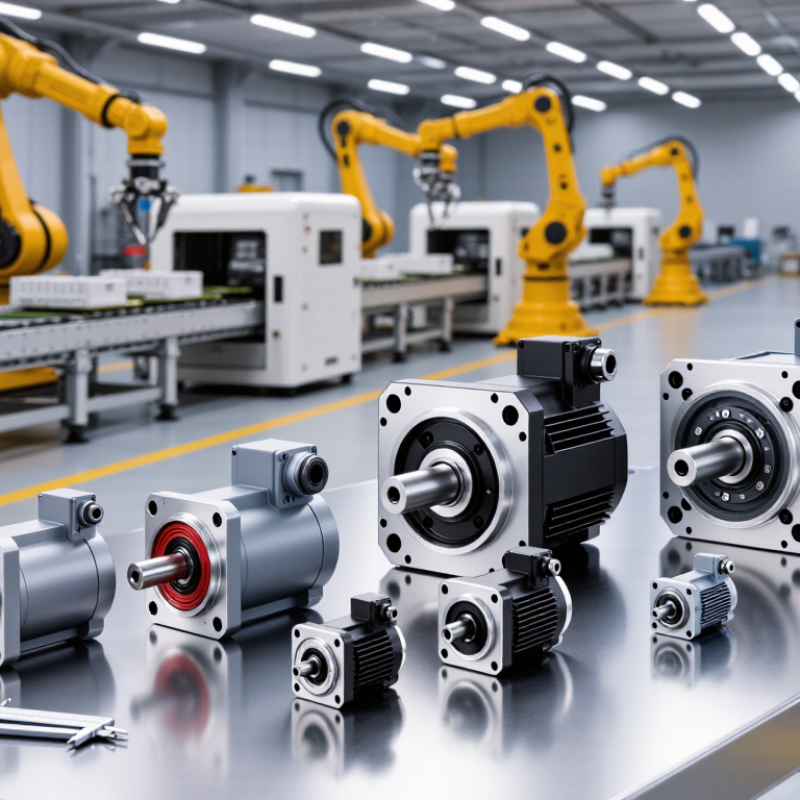
China Top 10 Compact Gear Motor Manufacturers?

Compact Gear Motors: Definition, Structure, and Main Applications

Compact gear motors combine an electric motor and a reduction gearbox in one compact unit. The motor creates rotational energy, while the gearbox lowers speed and increases usable torque. This arrangement saves space inside equipment and simplifies installation.

A typical unit contains a motor, gear train, housing, bearings, output shaft, seals, and lubricant. Gear materials and tooth design affect noise, efficiency, and service life. Common motor types include brushed DC, brushless DC, and AC designs. Their applications range from medical pumps and automatic doors to conveyor systems, smart locks, and small robotic equipment. Selection should consider torque, speed, duty cycle, voltage, shaft loading, and operating temperature. A small body does not guarantee low energy use. That assumption often causes design problems.

Tips: Check the required output torque under real load, not only during idle movement. Leave starting torque margin for friction, cold conditions, and repeated cycling. Confirm the gearbox can handle radial and axial forces. Test noise after installation, because surrounding panels may amplify vibration. Datasheets help, but physical testing remains important. A specification can still miss the real operating environment.

How China’s Compact Gear Motor Manufacturers Are Evaluated

Evaluating China’s compact gear motor manufacturers requires more than comparing catalog prices. Grand View Research estimates the global gear motor market will expand steadily through 2030, driven by automation, material handling, and energy-saving equipment. This growth increases supplier choice, but also creates uneven quality. Buyers should verify rated torque, gearbox ratio, efficiency, backlash, and allowable radial load under actual operating conditions.

A reliable evaluation begins with test evidence. Ask for measured data at 24 V, 48 V, or the required working voltage, not only nominal values. Check temperature rise after continuous operation, especially inside a small aluminum housing. Noise should be tested at a stated distance and speed. The IEC 60034 series provides useful motor testing principles, while ISO 9001 certification can indicate controlled processes, but neither replaces product-level inspection. The IEA 4E Electric Motor Systems Annex repeatedly highlights system efficiency, correct sizing, and maintenance as major energy factors.

Manufacturing consistency matters just as much as laboratory performance. Review winding records, gear material, lubrication, shaft runout, end-of-line testing, and batch traceability. Request samples from different production lots. That step is often missed. A supplier may achieve excellent prototype results, then struggle during mass production. Grand View Research also identifies customization as an important market trend, so engineering support deserves a separate score. Compare response time, drawing accuracy, sample revisions, and failure analysis. No scorecard is perfect. Field testing may still reveal vibration, seal wear, or starting problems that documents do not show.

China Top 10 Compact Gear Motor Manufacturers? - How China’s Compact Gear Motor Manufacturers Are Evaluated

Comparative evaluation matrix based on compact gear motor specifications, quality systems, customization capability, and documented compliance indicators.

Rank Anonymous Manufacturer Profile Primary Gear Motor Type Rated Voltage Typical Output Power Typical Output Torque Gear Ratio Range Peak Efficiency Ingress Protection Quality & Compliance Indicators Customization Lead Time Evaluation Score
1 Manufacturer Profile A Permanent-magnet DC planetary 12–24 VDC 20–180 W 0.8–18 N·m 4:1–gear 400:1 88% Up to IP65 ISO 9001; RoHS; REACH documentation 3–5 weeks 92/100
2 Manufacturer Profile B Brushless DC planetary 24–48 VDC 50–300 W 1.5–25 N·m 5:1–gear 300:1 90% Up to IP67 ISO 9001; RoHS; EMC test support 4–6 weeks 90/100
3 Manufacturer Profile C Worm gear motor 12–230 VAC/VDC 15–250 W 2–35 N·m 10:1–gear 300:1 72% Up to IP55 ISO 9001; RoHS; routine-load testing 3–6 weeks 87/100
4 Manufacturer Profile D Helical gear motor 24–220 VAC/VDC 30–400 W 1.2–32 N·m 3:1–gear 200:1 84% Up to IP65 ISO 9001; RoHS; dimensional inspection 4–7 weeks 85/100
5 Manufacturer Profile E Permanent-magnet DC spur 6–24 VDC 5–120 W 0.15–10 N·m 5:1–gear 500:1 80% Up to IP54 ISO 9001; RoHS; sample testing 2–5 weeks 82/100
6 Manufacturer Profile F Brushless DC spur 12–48 VDC 20–200 W 0.5–15 N·m 4:1–gear 300:1 86% Up to IP65 ISO 9001; RoHS; controller integration 4–8 weeks 80/100
7 Manufacturer Profile G Right-angle bevel gear motor 24–220 VAC/VDC 40–500 W 2–45 N·m 5:1–gear 180:1 82% Up to IP55 ISO 9001; RoHS; torque verification 5–8 weeks 78/100
8 Manufacturer Profile H Micro planetary gear motor 3–12 VDC 1–40 W 0.03–2.5 N·m 16:1–gear 1,000:1 78% Up to IP54 ISO 9001; RoHS; dimensional controls 3–7 weeks 76/100
9 Manufacturer Profile I AC induction gear motor 110–415 VAC 60–750 W 3–55 N·m 5:1–gear 200:1 76% Up to IP55 ISO 9001; RoHS; motor safety testing 5–9 weeks 74/100
10 Manufacturer Profile J Hybrid stepper gear motor 12–48 VDC 30–250 W 1–20 N·m 3:1–gear 100:1 70% Up to IP54 ISO 9001; RoHS; positioning-performance testing 4–8 weeks 72/100

Evaluation Criteria and Weighting

Technical performance: 25% Efficiency and durability: 20% Quality management: 15% Compliance documentation: 15% Customization capability: 15% Lead-time responsiveness: 10%

Note: The profiles are intentionally anonymized. Technical ranges are representative compact gear motor evaluation fields and should be confirmed against current product drawings, test reports, certification files, samples, and factory audit results before procurement.

China’s Top 10 Compact Gear Motor Manufacturers

China’s top 10 compact gear motor manufacturers are best compared through engineering evidence, not advertising claims. A practical shortlist should include suppliers with proven experience in medical devices, robotics, smart locks, and small automation systems. These applications demand stable torque, low noise, and precise speed control.

During supplier evaluations, I would examine motor drawings, test records, and sample consistency. Important details include 6–36V operating ranges, planetary or worm gearing, rated torque, stall performance, and gearbox efficiency. Ask for noise measurements at a fixed distance. Also check whether the supplier performs temperature-rise, endurance, vibration, and load testing in-house. Small differences matter. A motor that runs smoothly at 2,000 rpm may become noisy after repeated starts.

Reliable manufacturers should explain tolerances clearly and provide traceable inspection reports. Factory audits can reveal practical issues, such as incomplete testing equipment or poorly controlled assembly areas. Custom shafts, connectors, encoders, and mounting patterns are valuable, but customization may extend delivery times. That trade-off is easy to underestimate.

The “top 10” label should remain flexible. Market rankings can change with capacity, export experience, and application expertise. Some suppliers offer excellent prototypes but struggle with mass production. Others provide stable volume production but limited design support. My assessment would not rely on price alone. I would compare samples, documentation, communication speed, and after-sales response over several project stages. No shortlist is perfect. Performance data still deserves the final vote.

Product Range, Customization, and Technical Capabilities

China Top 10 Compact Gear Motor Manufacturers?

Compact gear motor suppliers in China commonly cover spur, planetary, worm, and helical gear designs. Their product ranges may include low-voltage DC motors, brushless motors, stepper motors, and geared actuators. Engineers should compare torque, speed, duty cycle, noise, efficiency, and thermal performance. A small motor may deliver high starting torque, yet stall under continuous load.

Customization often includes gear ratios, shaft dimensions, mounting holes, connectors, encoder feedback, brakes, and cable lengths. Some manufacturers also adjust windings, magnets, housings, and lubrication for specific operating conditions. Technical capability matters more than a broad catalog. Look for load testing, vibration checks, endurance trials, dimensional inspection, and traceable production records. CAD support and functional prototypes can reduce design mistakes. Still, early calculations are often imperfect. Real friction, temperature, and installation errors may change the result.

Tips: Request a sample with your actual load profile. Check torque at operating temperature, not only at room temperature. Ask for test data, noise limits, gear backlash, and expected service life. Confirm whether customization affects tooling costs or delivery time. A higher gear ratio is not automatically better. It can increase torque while reducing speed and efficiency. Evaluate the complete motor assembly, including the controller, wiring, and mounting structure.

How to Choose the Right Chinese Gear Motor Manufacturer

Choosing a Chinese compact gear motor manufacturer starts with the application, not the catalog.
Define output torque, speed, duty cycle, mounting position, noise limit, voltage, and ambient temperature. A 60 mm motor may fit the frame yet fail under repeated starts. I have seen prototypes pass bench tests, then overheat in dusty production lines. That gap matters. The International Energy Agency reports that electric motor systems consume about half of global electricity. Ask for measured input power, efficiency, temperature rise, and test conditions, rather than one efficiency percentage.

Use IEC 60034-30-1 efficiency classes when comparing motors. Request the exact IE class, rated-point data, and test method. For gearboxes, examine reduction ratio, backlash, radial load, lubrication, sealing, and service factor. These details reveal engineering depth. Request drawings, tolerance ranges, material specifications, and sample inspection reports. A credible Chinese factory should explain deviations honestly. Perfect claims deserve suspicion.

Audit manufacturing evidence before negotiating price. Check winding equipment, gear-cutting controls, end-of-line load testing, traceability, and corrective-action records. ISO 9001 certification helps, but it does not prove quiet operation or long service life. Request samples from normal production, not specially prepared units. Review aging, stall, vibration, and thermal tests. The World Bank’s 2023 Logistics Performance Index shows delivery reliability is a measurable supply-chain issue, not merely a sales promise. I would score suppliers across performance, consistency, documentation, and support. Price should remain one factor. My earlier mistake was weighting it too heavily.

FAQS

What should I compare when selecting a compact gear motor manufacturer?

Compare torque, speed, noise, efficiency, duty cycle, and temperature performance. Do not judge by price alone. Samples matter.

Which gear designs are commonly available?

Suppliers often provide spur, planetary, worm, and helical gear systems. Each design creates different speed, torque, noise, and efficiency results.

What voltage ranges are suitable for compact gear motors?

Many compact motors support approximately 6–36V operation. Confirm the exact range for your controller and application.

What customization options can manufacturers provide?

Common options include custom shafts, connectors, gear ratios, encoders, brakes, and mounting holes. Cable length and housing changes may also be possible.

How can I verify a supplier’s technical capability?

Request drawings, test records, inspection reports, and production samples. Check for load, vibration, endurance, and temperature-rise testing.

Should motor testing happen at room temperature?

No. Check torque at the actual operating temperature. Performance can change after repeated starts or continuous loading.

What should I ask about noise and gearbox quality?

Request noise measurements at a fixed distance. Also ask about gear backlash, gearbox efficiency, and service-life expectations.

Can a higher gear ratio improve motor performance?

It can increase output torque and reduce speed. However, efficiency may fall. Higher is not automatically better.

How can I avoid mistakes during product development?

Test a sample with the real load profile, controller, wiring, and mounting structure. Early calculations can be imperfect.

Are all leading suppliers equally suitable for mass production?

No. Some perform well with prototypes but struggle with volume. Others offer stable production but limited design support. The shortlist may change.

Conclusion

This article provides a practical overview of the Compact Gear Motor, explaining its basic definition, internal structure, operating principles, and common applications in automation, robotics, medical equipment, packaging machinery, household devices, and other space-sensitive systems. It also examines how Chinese manufacturers are evaluated, including product quality, transmission efficiency, motor performance, production capacity, quality control, certifications, delivery reliability, and after-sales support.

The guide introduces ten leading categories of Chinese Compact Gear Motor manufacturers without focusing on brand promotion, highlighting their product ranges, customization options, engineering capabilities, and suitability for different industrial requirements. It also explains how to compare manufacturers according to torque, speed, voltage, gear ratio, noise, operating environment, service life, and integration needs. By considering technical communication, sample testing, production consistency, cost, and long-term cooperation potential, buyers can make a more informed decision and select a reliable manufacturing partner for their specific application.

Aria

Aria

Aria is a dedicated marketing professional with a deep passion for innovative strategies and a keen understanding of our company's product offerings. With a wealth of experience in the industry, Aria excels at crafting engaging content that highlights the unique features and benefits of our......